
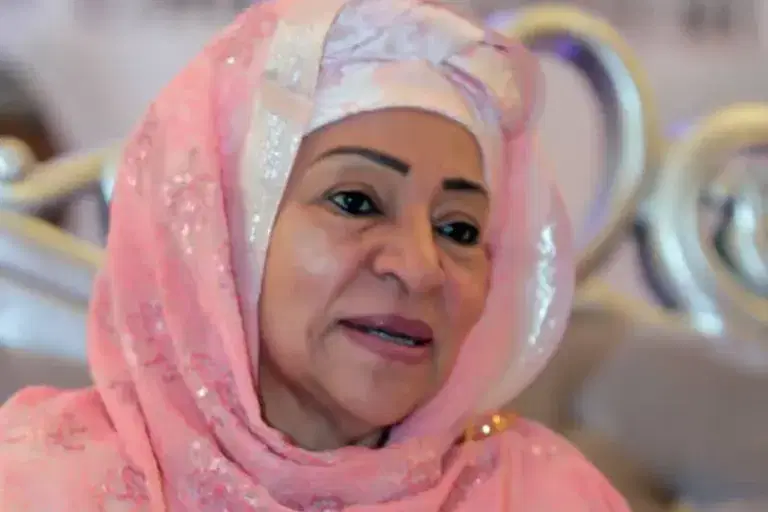
Former First Lady Maryam Abacha has vehemently denied long-held accusations alleging that her late husband, General Sani Abacha, embezzled Nigeria’s public funds during his rule.
General Abacha served as Nigeria’s military leader and commander-in-chief from 1993 until his death on June 8, 1998.
In a recent interview on TVC, commemorating 27 years since his passing, Maryam Abacha asserted that the financial transactions attributed to her husband have been grossly misrepresented. She challenged the narrative that substantial sums were illicitly acquired, urging critics to provide credible evidence to support their claims.
Over the years, numerous Nigerian administrations have reclaimed hundreds of millions of dollars believed to be part of the so-called “Abacha loot,” funds hidden in various foreign accounts in countries such as Switzerland, the United States, and the United Kingdom, which have since been allocated to social investment initiatives.
During the interview, Maryam questioned the validity of the allegations, asking, “Who can attest to the alleged hidden funds? Did you witness any signatures or evidence of money stashed abroad? The funds that my husband secured for Nigeria mysteriously disappeared within months, yet this is seldom discussed.”
She pointed out that the ongoing blame directed at her husband reveals broader societal issues, questioning whether such attitudes stem from tribalism or religious bias. “Why are we so quick to blame others? I pray for unity among Nigerians, for honesty and kindness to prevail. We must stop the animosity towards one another, regardless of tribal or religious differences.”
Maryam also expressed frustration over the public’s belief in claims that subsequent governments successfully recovered funds attributed to her husband. “Nigerians should be more discerning. No single individual—be it Babangida, Abacha, or Abiola—can define Nigeria alone. Each person, even the individual on the street, holds value. This divisiveness must end. Babangida does not hold the power to shape or reshape our nation.”
Furthermore, she dismissed assertions that forces under Abacha were responsible for the annulment of the June 12 election during Ibrahim Badamasi Babangida’s presidency. “I can state unequivocally that my husband did not annul that election. If he had, it would imply he wielded more power than the president, which is simply not the case.”