
By SUNDAY ABBA, Abuja
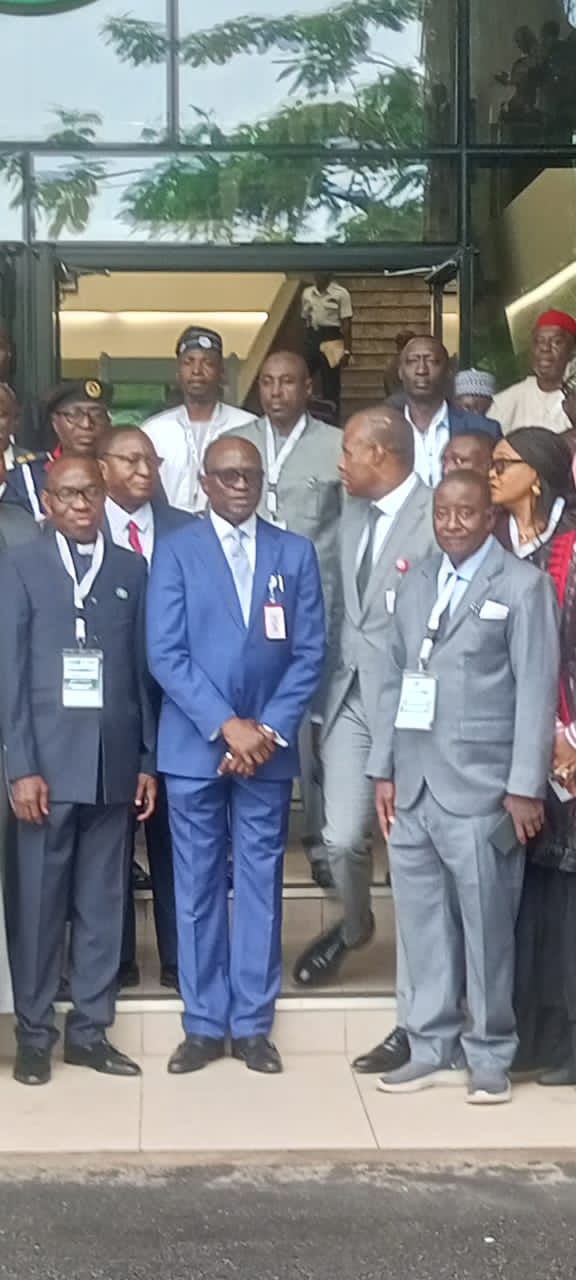
A 2-day stakeholders workshop to deliberate on the final draft of the review of the National Counter-Terrorism Strategy (NACTEST) has organised in Abuja by the Nigerian National Counter-Terrorism Centre (NCTC) of the Office of National Security Adviser (ONSA) in conjunction with the EU-UN Global Terrorism Threats Facility
Declaring the event slated for Tuesday the 1st and Wednesday the 2nd July, 2025, NCTC Coordinator, Maj-Gen. Adamu G. Laka, highlighted the importance of the workshop to national security.
He said, “It is with profound honour and a deep sense of duty that I welcome you all to the National Counter Terrorism Centre on behalf of the National Security Adviser, Mallam Nuhu Ribadu, for this National Counter Terrorism Strategy Workshop.
“Distinguished participants, as you may recall, the National Counter Terrorism Strategy 2016 has guided our national efforts in the fight against terrorism for nearly a decade.
“However, given the dynamic and ever-evolving nature of the security landscape, it has become increasingly clear that a comprehensive review and update of this strategy are long overdue.
“This is necessary to ensure it reflects emerging threats, the evolving tactics of terrorist organizations, and the invaluable lessons learned from our counterterrorism operations over the years.
General Laka revealed that the consolidated draft being worked on to produce a revised NACTEST was an outcome of the review and the contributions made during the several stakeholder meetings.
“I am proud to say that this draft is the result of months of diligent work and valuable inputs from a broad range of stakeholders across ministries, departments, agencies, civil society organisations, and our international partners. These wide array of perspectives have been instrumental in producing a draft strategy that is robust, inclusive, fully aligned with international best practices and will stand the test of time,” Laka said.
According to the Nigerian Counter-Terrorism boss, “this review comes at a particularly important time, as the NCTC is transitioning into a Regional Centre of Excellence for Counterterrorism in West Africa and the Sahel, following the declaration by President Bola Ahmed Tinubu, GCFR.
“This transition underscores Nigeria’s leadership and commitment to regional security, and it demands that we produce a National Counter Terrorism Strategy that meets Nigeria’s needs and also sets a benchmark for the Region”.
Speaking further, he said, “the centre’s expanded role as a Regional Centre of Excellence includes spearheading capacity-building efforts for West African and Sahelian states. Indeed, we are currently conducting 4 simultaneous courses at the Centre over the next 2 weeks. These are the Silver Commanders, Gold Commanders, Intelligence Analysis, and Train-the-Trainer Aviation Security Courses, all organised in partnership with the British Council.
“In the same breath, let me use this medium to express our profound gratitude to the British Council and all our partners for their steadfast support and invaluable contributions.”
Giving an insight into the workshop, he said, “This workshop is also carefully designed to ensure active participation and collective ownership of the revised strategy. Accordingly, Day 1 will feature the presentation of inputs and the draft revised NACTEST, to provide an opportunity to review contributions received so far and align the document with stakeholder expectations and the realities of the current threat environment.
“On Day 2, participants will engage in plenary and specialised breakout sessions to promote deeper dialogue, enable focused discussions on thematic areas of the strategy, and generate actionable recommendations.”
He then urged active participation of stakeholders, bring their unique expertise to bear, and tasked them “to remain guided by the 2 foundational pillars of our counterterrorism approach: the Whole-of-Government and Whole-of-Society strategies. These pillars remind us that terrorism is not only a security challenge but also a social and ideological one, requiring the combined efforts of government institutions and society at large”.
He thanked the co-sponsors, EU-UN Global Terrorism Threats Facility for their support, adding that their expert inputs over the past week have significantly enriched the quality of the draft document.
Also speaking, the director, Policy and Strategy, Commodore A. Madawaki, who harped on an implementable strategy said they would ensure that the final document meets legal and international requirements, including human rights, gender and humanitarian laws.
“We will also incorporate all national, regional and international legislations that relate to terrorism. Our strategy must address the current security challenges and ensure that all ministries, departments and agencies understand their roles and responsibilities as it relates to the implementation of the strategy,” he added.