
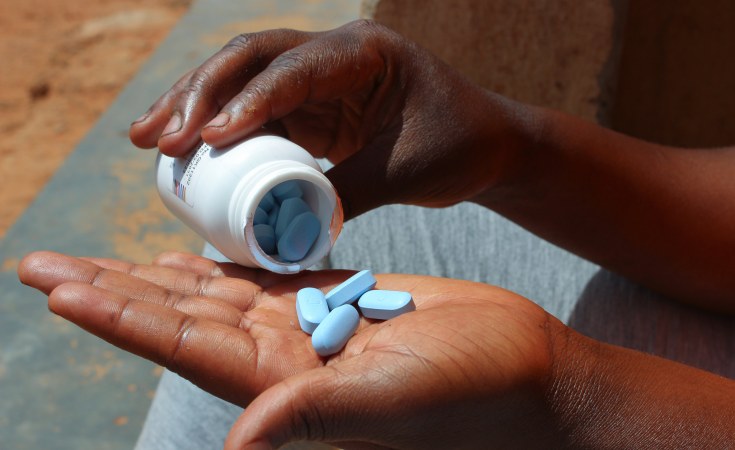
Gugu, a 54-year-old South African woman living with HIV, used to collect her antiretroviral medication from a clinic in central Johannesburg funded by USAID.
But after US President Donald Trump cut major foreign aid earlier this year, clinics like hers shut down, leaving thousands of HIV-positive people across South Africa in a difficult position.
Gugu was fortunate. Before her clinic closed, she was given a nine-month supply of medication instead of the usual three.
Her stock will run out in September, and she plans to visit a public hospital after that.
She found out she was HIV-positive about ten years ago, after leaving her job as a sex worker.
After developing a persistent cough, she was first misdiagnosed with a chest infection.
When treatment failed, she got tested and confirmed her HIV status. Since then, she has been on treatment.
Now working for an NGO, Gugu helps pregnant sex workers stay on treatment and supports them during check-ups.
Many sex workers previously relied on USAID-funded clinics for easy access to medicine and support. With these clinics closed, many now have to visit public hospitals.
Accessing care in public hospitals is time-consuming. Patients often arrive as early as 4 or 5am and still wait all day.
This long wait discourages some sex workers, who rely on their time to earn money. Some patients have also faced poor treatment from staff, and there’s worry about privacy and judgment from healthcare workers.
Before the funding cuts, USAID played a major role in helping people with HIV, especially vulnerable groups like sex workers.
The cuts have added pressure on the public health system, which is already stretched.
A recent report from the UN shows that HIV treatment had made major progress. New infections had dropped, and millions of lives had been saved.
In sub-Saharan Africa, new HIV infections had fallen by more than half, and life expectancy had increased.
South Africa has around 7.7 million people living with HIV, with nearly 6 million on treatment.
The US-backed Pepfar programme, started by former President George W. Bush in 2003, had invested more than $100 billion globally to fight HIV and AIDS.
South Africa used the funds for mobile clinics and other health services. About 17% of the country’s HIV response was supported by this funding.
Health experts fear that with funding now reduced, there could be a rise in HIV, tuberculosis, and other diseases. Gains made over the years may be reversed.
Scientists also warn that research for an HIV vaccine and better treatments is slowing down.
One of the affected projects is at Wits University, where researchers were working with other African labs on an HIV vaccine. Due to the funding cut, trials have been delayed or stopped.
The team is trying to find new sources of money, but it could take months or even longer to get back on track.
This shift may force research to move outside Africa, even though much of the progress was being made on the continent. New preventive drugs like Prep and Lenacapavir were tested in South Africa, but future testing may no longer happen locally.
With fewer resources, both treatment and research in South Africa are facing major challenges.
Many people living with HIV now worry about keeping up with their medication and staying healthy.