
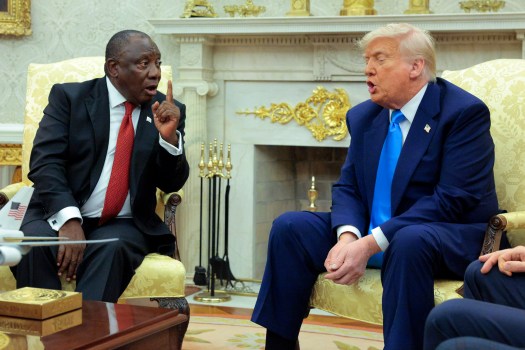
Liberia’s President Joseph Boakai met with U.S. President Donald Trump this week during a White House gathering of West African leaders
The meeting was welcomed by Liberia, despite a remark from Trump about Boakai’s English fluency that drew attention across social media and in the country itself.
While addressing the summit, Trump complimented Boakai on his spoken English, seemingly unaware that English is the official language of Liberia.
The Liberian president, who was educated in his home country, responded politely to the comment, which some saw as awkward or misinformed.
According to Liberia’s Foreign Minister Sara Beysolow Nyanti, the country appreciated the invitation and viewed the meeting as a chance to build stronger relations with the United States.
She said there was no offence taken and expressed a desire for continued cooperation based on respect.
Liberia, located in West Africa, was founded in the 19th century by freed slaves from the United States and is the oldest republic in the region. English has remained the national language and is widely spoken across the country.
The remark from Trump has since inspired a music video tribute to President Boakai by Queen Juli Endee, a well-known Liberian singer and cultural figure.
In the song, Boakai is referred to as the “English King of Africa,” and the video features U.S. flags and T-shirts with images of both leaders.
Public opinion in Liberia has been mixed. Some citizens were proud to see their president featured at the high-level summit and believed his presence reflected growing international recognition.
Others felt the comment from the U.S. president was disrespectful and unnecessary, suggesting it mocked Boakai’s background.
Despite the debate, Liberia’s leadership remains focused on fostering stronger diplomatic ties with the United States while promoting its cultural identity on the world stage.