
By Emmanuel Awari-Jalingo
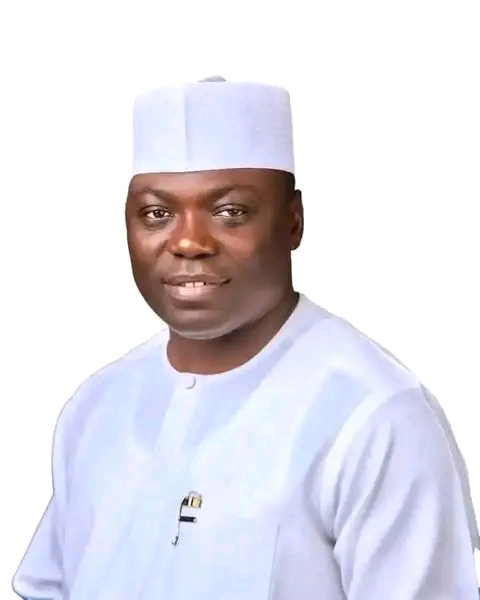
The Governor of Taraba State, Dr. Agbu Kefas, has expressed deep sorrow over the passing of Nigeria’s immediate past President, Muhammadu Buhari.
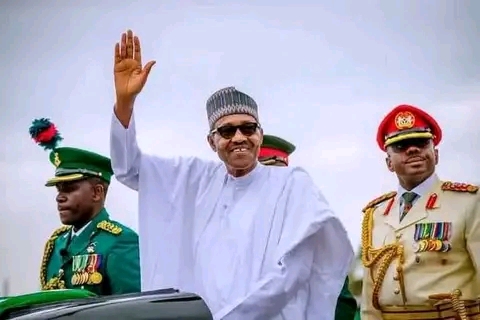
Governor Kefas described the former President as a patriotic leader who devoted his life to the service of the nation, both as a military officer and as a democratically elected President. He noted that Buhari’s legacy will be remembered for his commitment to national unity, anti-corruption efforts, and his austere personal discipline.
The Governor acknowledged Buhari’s influence in shaping Nigeria’s democratic journey and commended his dedication to maintaining the sovereignty and stability of the country during challenging periods in its history.
The Government and people of Taraba State join the rest of the nation in mourning the loss of the former President.
Governor Kefas extended his condolences to the family of the late President, the Government of Katsina State, and all Nigerians grieving this national loss. He prayed for the peaceful repose of the former President’s soul and for strength to those he left behind.
Meanwhile, Nigerians have continue to bear their minds on the death of the former President Buhari.
Let’s take a look at some comments.
“Buhari Beyond the Headline: “Baba Go Slow”, ‘Buhari of Sudan’, Hero or Villain?. As we mark the passing of Former President Muhammadu Buhari, let’s dive deeper—beyond the official accolades and criticisms—to explore the man known as both “Baba Go Slow” and “Buhari of Sudan.” His legacy—complex, contested, and impossible to ignore—still echoes across every corner of Nigeria.
Military Roots & the War Against Indiscipline
Buhari seized power in 1983 as a strict military ruler, launching the War Against Indiscipline.
He cracked down on ‘immorality’ with public whippings, frog-jumps for late workers, and life sentences for exam cheats. His 18-month rule ended abruptly with a coup, landing him in detention—an ironic twist for a man who once enforced authoritarian order.
From Coup to Contender
After years in the political wilderness, Buhari returned for four failed presidential bids (2003–2011). His narrow defeat in 2011 sparked violent riots and allegations of sectarian-fueled election violence. In 2015, he made history—becoming Nigeria’s first opposition candidate to unseat an incumbent, riding a wave of patriotism, anti-corruption pledges, and security promises.
Anti‑Corruption, Economic Hardship & Security Fault Lines
His administration’s hallmark was anti-graft zeal—yet critics argue the wins were limited. Trade restrictions and border closures strained an already fragile economy. Nigeria slipped into two recessions under his watch, while inflation and currency instability eroded livelihoods. His “Baba Go Slow” nickname symbolized not just personality but often sluggish governance in the face of urgent crises.
Security: Boko Haram, Banditry & the Price of Muscle
Early efforts pushed back Boko Haram, and some Chibok girls were rescued. But over time, insecurity expanded—from insurgency in the Northeast to banditry in the Northwest and secessionist unrest in the Southeast. Farmer-herder clashes and allegations of military abuse deepened national fear and resentment.
Cloning Rumors & the “Sudan Double”
In 2017, wild conspiracy theories claimed Buhari had died and been replaced by a Sudanese impostor named “Jubril.” He dismissed it as “mischievous” and “not funny,” yet public mistrust kept the rumor alive. Even Obasanjo called the theory “ridiculous,” but the fact that many still believed it revealed a deep trust gap between the state and the people.
Infrastructure, Islamism & the Ruga Debacle
Buhari’s administration invested in roads, rails, and social welfare via the Petroleum Trust Fund, earning praise for transparency and reach. But controversy followed his push for the Ruga settlement plan, widely criticized as promoting ethnic and religious bias. His occasional nods toward Sharia stirred long-standing debates over secularism and governance.
Civil Rights & Civilian Discontent
From the chilling #EndSARS Toll Gate massacre to social media bans and journalist arrests, Buhari’s leadership faced accusations of eroding civil liberties. His frequent medical trips to London—sometimes lasting months—worsened public frustration, sparking debates about transparency and accountability.
The Paradox of Buhari’s Legacy
Praise
Honesty and personal austerity—rare traits in Nigerian politics
Infrastructure growth—roads, rails, and social programs
Initial gains in the fight against Boko Haram
Critique
Authoritarian instincts—curbed press freedom and protests, Economic decline, rising inflation, and mass unemployment.
A fractured and deeply divided Nigeria.
Buhari’s life reads like a nation’s mirror—reflecting both triumphs and traumas. He was the soldier, the reformer, the authoritarian, the elected president, and even the subject of one of Africa’s most bizarre political rumors.
Discussion prompts for readers:
1. Do you see Buhari’s reign as “discipline through reform” or “authoritarian decline”?
2. What moment defines Buhari’s legacy for you—War Against Indiscipline or #EndSARS?
3. He once said, “I belong to everybody and I belong to nobody.” What do you make of that today?.
(Clement Aboshire).
“GOOD BYE BABA BUHARI
Today, we mourn the loss of a remarkable leader, a man whose integrity and simplicity inspired a nation. His legacy will live on, shaping the lives of countless individuals who admired his commitment to public service.
With unwavering dedication, he led with purpose, leaving an indelible mark on the nation’s history. His leadership style, characterized by discipline and straightforwardness, earned him respect from many.
Though opinions about his policies may vary, one thing remains undeniable – his personal integrity. He lived a life of simplicity, untouched by the allure of extravagance.
His impact extends beyond politics; he inspired a generation with his strong work ethic and moral compass. His memory will continue to motivate those striving for excellence.
As we bid farewell to this extraordinary individual, we take comfort in the lessons he imparted. May his legacy guide us toward a brighter future.
May Allah forgive his shortcomings and grant him Jannatul Firdaus. May he rest in peace, and may his soul find eternal peace. Innā lil-lāhi wa innā ilayhi rāji‘ūn (We belong to Allah, and to Him, we shall return). May his contributions be a lasting testament to his character.
(Aminu Yunusa)
“Death doesn’t care about your tribe, religion, or political leanings. It comes for all. Now, with Buhari’s passing, the mockery of death has resumed and even close allies in coalition cannot seem to agree on how to speak of him in death.
But honestly, no one needs to be cautioned anymore. Let those who believe they will live forever keep mocking the dead.
“I am deeply saddened by the news of the passing of former President Muhammadu Buhari, a man whose life was defined by unflinching patriotism, stoic discipline, and a lifelong commitment to the sovereignty and unity of our great nation.
President Buhari was not just a former Head of State, he was a symbol of Nigeria’s resilience. From the battlefield to the corridors of power, he served with the kind of austere conviction and firm belief in duty that marked him as a soldier of principle and a leader of formidable will.
His death is not just a loss to his immediate family and the people of Daura, it is a profound national tragedy. Nigeria has lost a statesman who bore the burdens of leadership in both turbulent and triumphant times and whose legacy will be remembered for generations to come.
To his beloved family, I offer my deepest condolences. I pray for strength and comfort in this time of grief. To the people of Katsina State and the entire nation, I mourn with you. May we all take solace in the knowledge that he gave his life to the service of Nigeria and never wavered in his belief in her promise.
May Allah, the Most Merciful, forgive his shortcomings and grant him eternal rest in Aljannah Firdaus.
Atiku Abubakar, GCON
Vice President, Federal Republic of Nigeria (1999–2007).”
“This is a sober reminder to all—leaders, the wealthy, and the powerful—that life is fleeting. No position, power, or possession can stop the certainty of death. As Scripture says, “For dust you are and to dust you shall return” (Genesis 3:19).
Let every heart reflect: What shall it profit a man to gain the whole world and lose his soul? (Mark 8:36).
May his soul rest in perfect peace, and may we all live with eternity in view.
(Mathew Joshua).
“Late President Buhari on Taraba’s biggest asset:
On the 26th March, 1985. Former head of state, General Muhammad Buhari planted one of the first tea seed at the kakara tea estate, sardauna LGA, Taraba state which produces the highland tea.
The tea plantation is one of the largest in Africa.
The first tea planted is still in the tea farm.
“It is with profound sadness and a heavy heart that I acknowledge the passing of former President Muhammadu Buhari, a revered leader who dedicated his life to the service of Nigeria.
Muhammadu Buhari’s journey was one of remarkable resilience and unwavering dedication. From his early days as a military officer to his leadership as Nigeria’s President, he exemplified discipline, patriotism, and a deep sense of duty. His tenure was marked by efforts to combat corruption, improve security, and foster economic growth, even in the face of numerous challenges.
Beyond his political achievements, Buhari was a symbol of hope for many Nigerians. His unwavering commitment to restoring stability and promoting national unity endeared him to citizens who saw in him a leader who prioritized the nation’s interests above personal or sectional gains.
As we mourn his passing, it is also an opportunity to reflect on his legacy and the values he stood for. Nigeria has lost a leader who dedicated his life to public service, and his contributions will be remembered for generations to come. His vision for a better Nigeria continues to inspire many, and his memory will remain etched in the hearts of those who admired his resilience and patriotism.
Our thoughts and prayers go out to his family, friends, and all Nigerians during this difficult time. May his soul rest in peace, and may Nigeria continue to move forward in unity and progress, honoring the legacy of a truly dedicated statesman.
Rest in peace, Muhammadu Buhari. Your legacy lives on.
Rt Hon (DCN) Peter Abel Diah former Speaker, Taraba State House of Assembly.
THE PASSING OF A MIGHTY WARRIOR
“How are the mighty fallen in the midst of battle….how are the mighty fallen and the weapons of war perished!”- 2 Samuel 1: 25 -27.
With yesterdays tragic passing it is clear that the last of the three great Mahdis and most formidable warriors and messianic leaders of Northern Nigeria has finally fallen.
The first was Sheik Usman Dan Fodio, who founded and established the Sokoto Caliphate, the second was Sir Ahmadu Bello, who was the erstwhile Premier of the old Northern Region and the Sardauna of Sokoto and the third was General Muhammadu Buhari, who was the immediate past President of Nigeria and the man that was commonly referred to by the Northern masses as ‘Mai Gaskiya’.
All three were reverred by their people and were regarded as not just pious and righteous men but also deeply courageous souls who would do anything in defence of their faith and who risked all in their fight against injustice and evil.
Yet Buhari managed to achieve what the others could not: he became the indisputable leader of not just the North but also of the whole of Nigeria and he did it THREE times!
His role in the affairs of our nation transcended politics and veered into the spiritual.
In the North he was not seen as a mere political leader but more as a religion and his following was indescribable, unprecedented and massive.
He was a rare phenomenon and an intrguing enigma: a remarkable man and inspirational leader whose destiny was intrinsically intertwined with Nigeria’s.
He managed to achieve what no other Nigerian leader has managed to achieve in our entire history: the unflinching, unconditional, unquestioning and literally fanatical adulation and love of the whole of the core North and the support of many in the South.
He was indeed the first amongst equals and, love him or hate him, his legacy and commitment to the service of our nation has left an indelible mark.
The question on everyone’s mind is who can possibly take up his mantle of Northern leadership today and who can fill into his gargantuan shoes?
Whatever the answer to those questions are one thing is clear, the North and indeed Nigeria shall NEVER be the same without him.
May the soul of this great, noble and proud warrior and patriotic son of Nigeria rest in peace and may God grant his family the fortitude to bear this loss.
(FFK)