
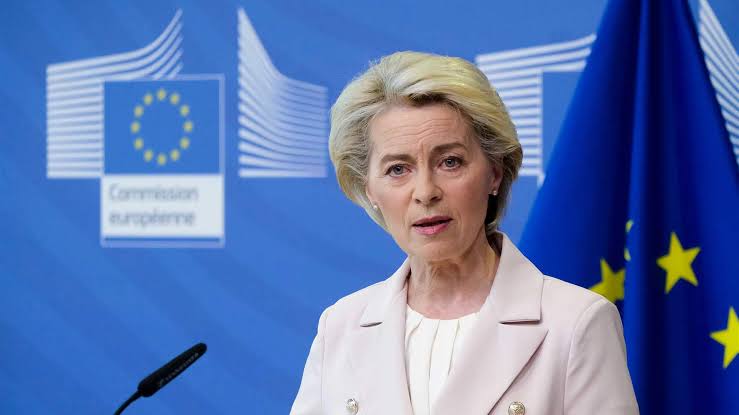
The European Commission has presented a new long-term budget proposal that would raise the European Union’s total spending to €2 trillion for the 2028–2034 period.
This increase of €800 billion from the current €1.2 trillion framework reflects the EU’s response to a shifting global landscape and internal demands.
The updated budget outlines key financial commitments across multiple sectors.
One of the largest portions, €865 billion, will be directed to national and regional development programs through a newly proposed partnership fund.
These funds will support infrastructure, job creation, and social initiatives in member states and regions.
Another €451 billion is planned for investment in innovation-focused sectors such as clean energy, digital technologies, biotechnology, defense, space exploration, and food systems.
This funding is intended to boost the EU’s global competitiveness and adapt to evolving economic and environmental challenges.
Agriculture remains a major component of the budget, with around €300 billion reserved to maintain support for European farmers.
This comes amid concerns from agricultural communities regarding financial stability and subsidy levels.
A notable addition is the €100 billion allocation for the reconstruction and recovery of Ukraine.
This portion of the budget addresses long-term aid to Ukraine as it continues to deal with the consequences of the Russian invasion that began in 2022.
The proposal was introduced in Brussels by European Commission President Ursula von der Leyen, alongside EU budget commissioner Piotr Serafin.
It will be debated and refined in discussions with the European Parliament and member states before adoption.
The multi-annual financial framework (MFF) acts as the EU’s main financial planning tool, outlining spending priorities and policy direction over a seven-year period.
This proposed budget aims to provide a clear structure for responding to ongoing challenges and preparing for future shifts in the EU and beyond.