
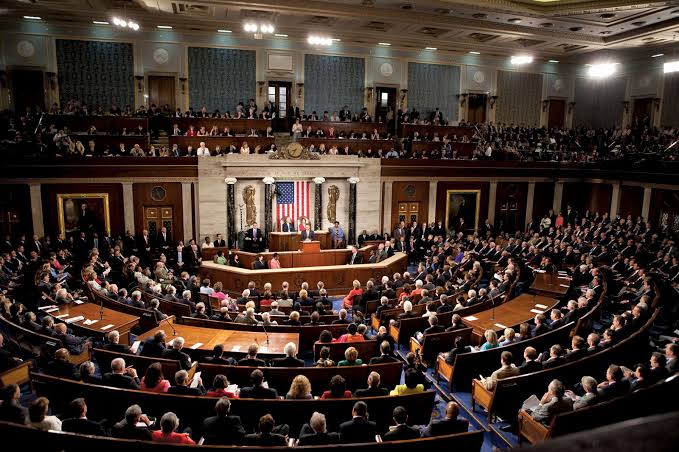
The House of Representatives has approved a $9 billion spending cuts bill and sent it to President Donald Trump for final approval just after midnight on Friday.
The legislation passed in a close 216 to 213 vote, with only two Republicans breaking ranks to oppose it.
The bill, known as a rescissions package, would block $8 billion in funding for the U.S. Agency for International Development (USAID) and $1 billion for the Corporation for Public Broadcasting for the rest of the 2025 fiscal year.
These funds had already been set aside by Congress but are now being withdrawn as part of a rare budget rollback.
Speaker of the House Mike Johnson secured the win using a fiscal tool that hasn’t been used in over 20 years.
The move is largely viewed as a test of the Republican-led effort to control spending under the Trump administration, especially in areas they consider unnecessary or politically unfavorable.
Passing the bill before the Friday deadline was crucial. Without action, the White House would have been required to reallocate the withheld funds as originally planned.
Although the bill passed, it sparked heated debate on the House floor. Democrats strongly opposed the cuts, accusing Republicans of targeting essential foreign aid and public services.
In contrast, many Republicans saw it as a step toward reshaping federal spending priorities and cutting what they call excessive or “woke” spending.
During the debate, Democrats also raised the issue of transparency around the Jeffrey Epstein case.
Some lawmakers attempted to force votes to release sealed records related to Epstein, drawing attention to past allegations and pushing for public access to government-held documents.
These attempts did not disrupt the final vote but added political pressure throughout the process.
To manage the tensions, the House Rules Committee agreed to advance a separate, nonbinding resolution focused on Epstein-related transparency alongside the budget measure.
This marks the first time a rescissions package has been passed into law since 1999. With its arrival on Trump’s desk, the bill now awaits his signature to officially cancel the planned spending for the rest of the fiscal year.