
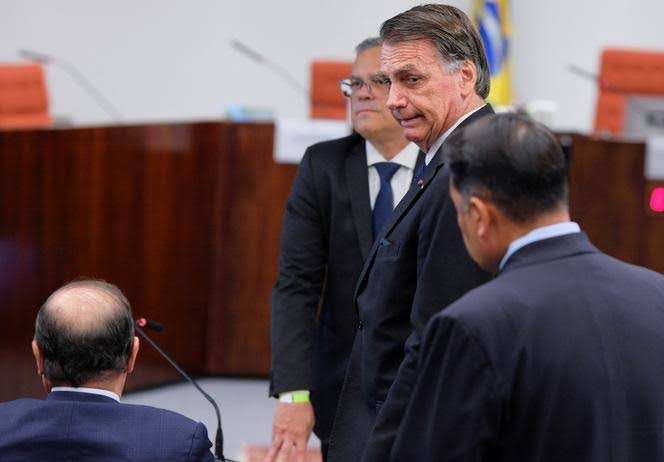
Brazil’s Supreme Court has ordered former President Jair Bolsonaro to wear an electronic monitoring tag while awaiting a verdict in his ongoing trial over an alleged attempt to overturn the 2022 election.
The decision, issued Friday by Justice Alexandre de Moraes, marks a key development in the high-stakes case that has captured global attention.
The court also cited Bolsonaro and his son, lawmaker Eduardo Bolsonaro, for encouraging actions seen as threats to Brazil’s democratic institutions.
Prosecutors accuse the former president of trying to stop the peaceful transition of power after losing to current president Luiz Inácio Lula da Silva.
Bolsonaro has dismissed the court’s move as political persecution.
He is charged with leading a plot to subvert the election result, allegedly involving efforts to convince the military to back an illegal power grab.
When the plan failed, supporters took to the streets and stormed key government buildings in Brasília in a chaotic episode compared to the 2021 Capitol riot in the United States.
Federal prosecutors this week filed formal charges against Bolsonaro and seven others for forming an armed group and trying to forcibly remove the democratic government.
A conviction could bring up to 40 years in prison.
The trial has triggered international consequences. Former U.S. President Donald Trump issued a public letter defending Bolsonaro and calling for the case to be dropped.
Trump went further on July 9, announcing a sharp increase in tariffs on Brazilian imports, set to take effect on August 1.
Unlike past trade moves, this decision was openly political, with Trump targeting Brazil’s judicial system.
In response, President Lula called Trump’s actions “unacceptable” and pledged to defend Brazil’s sovereignty.
He warned that his government would respond if the U.S. tariffs go into force.
As a Supreme Court panel prepares to rule, Brazil now faces political turmoil at home and rising tensions with the United States, under the weight of one of the most consequential trials in its modern history.