
By SUNDAY ABBA, Abuja
In a move to deepen grassroots transformation across Africa’s mining landscape, Women in Mining Africa (WiM-Africa) has officially released its Chapter Management Guidelines—a comprehensive operational framework designed to equip, standardise, and empower chapters across the continent and diaspora.
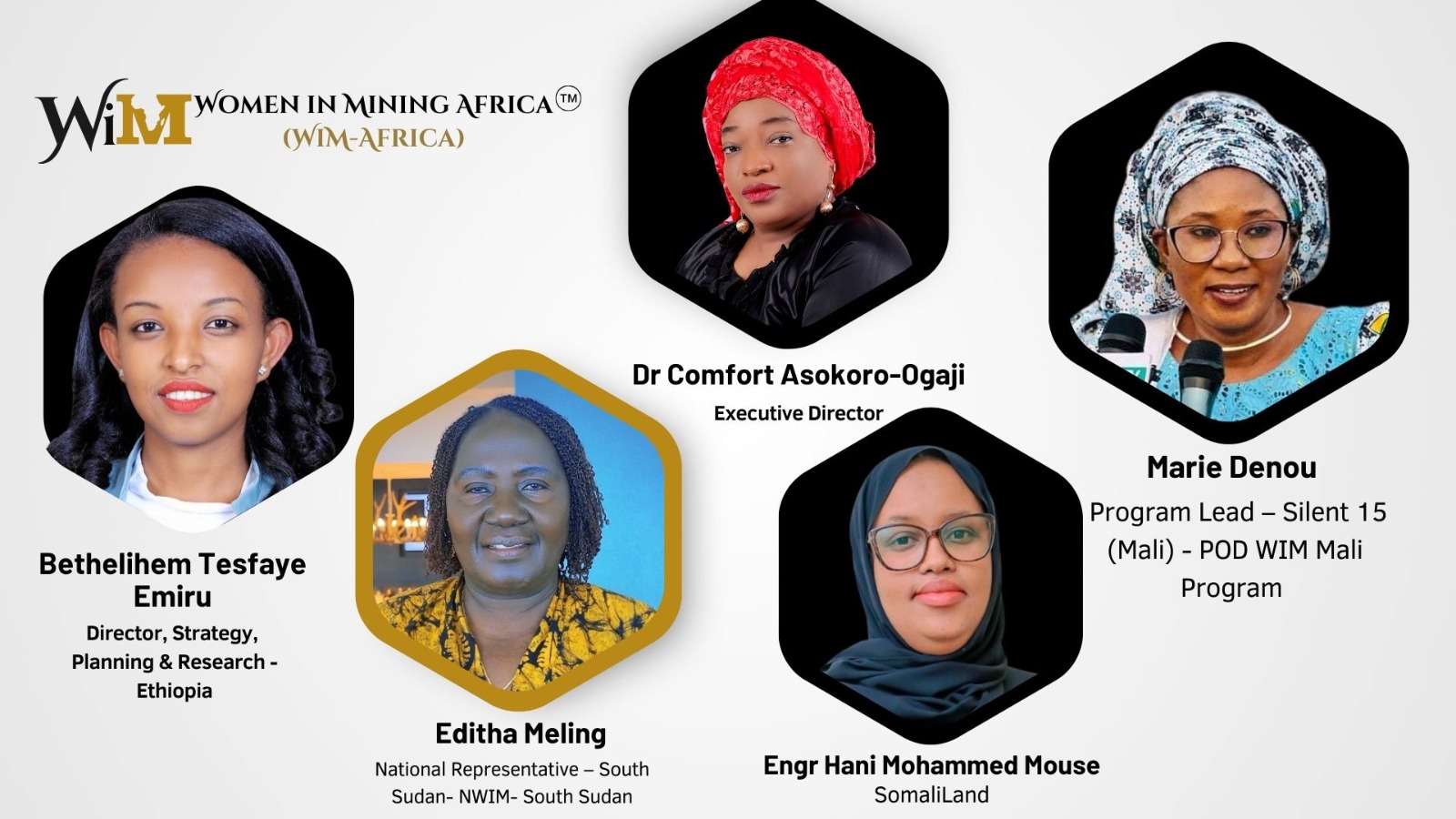
Developed through months of strategic consultations and aligned with international best practices, the guidelines offer clear direction on governance, programme delivery, accountability, volunteer coordination, and partnership development, said a statement signed by Dr Comfort Ogaji-Asokoro, Executive Director (ED), WiM -Africa, and made available to SUMMIT POST.
The framework is structured to align all chapter activities with WiM-Africa’s institutional structure, Strategic Focus Areas (SFAs), and a 7-Point Agenda (7PPAs), ensuring coherence and impact from the community level to continental platforms.
According to the statement, more than a manual, the guidelines are a call to action: for every chapter to rise with clarity, lead with purpose, and deliver measurable change.
Whether operating in artisanal mining communities, universities, cooperatives, or national hubs, each chapter now has the tools to strengthen local engagement, enhance reporting, and build cross-border solidarity for Africa’s mineral future.
Speaking on the rollout, Dr Comfort Asokoro-Ogaji, Executive Director of WiM-Africa, emphasised that, “A decentralised movement only thrives with coordinated standards. This framework is not about control—it is about consistency, credibility, and collective power to change narratives from the ground up”.
The new guidelines also introduce accountability measures and monitoring tools to ensure that chapters remain aligned with WiM-Africa’s values—particularly gender equity, transparency, and local ownership.
From reporting templates to funding protocols, mentorship structures to conflict resolution systems, chapters are now better positioned to deliver inclusive, visible, and ethical leadership in the mining ecosystem.
Chapters in countries are now invited to review, adopt, and internalise the guidelines—ushering in a new era of organized growth, inter-chapter collaboration, and high-impact advocacy.
WiM-Africa calls on all existing and emerging chapters to use the new framework as a tool for reflection, renewal, and radical action.
Speaking at the event where the guidelines were launched, the ED, Wim-Africa, Asokoro-Ogaji, reiterated the movement’s conviction that “WiM-Africa is not just a network, but also an infrastructure for systemic change.”
She emphasised that the newly unveiled guidelines were more than a handbook—they are a strategic framework designed to anchor local action in excellence, integrity, and continental relevance.
“We are building more than chapters—we are raising structured, accountable, and visionary platforms capable of delivering impact in mining communities, schools, cooperatives, and public institutions,” she stated.
She further highlighted that every chapter must uphold a standard leadership framework made up of five core officers: a chapter coordinator (or chairperson), Programmes Lead, outreach & membership officer, communications & media officer, and monitoring, evaluation and learning (MEL) Officer. These roles she said are key to ensuring effective planning, visibility, reporting, and community engagement.
Dr Ogaji concluded by calling on chapters and prospective leaders to embrace the guidelines as “a shared compass for legitimacy, inclusion, and transformative leadership”—urging them to ground their work in accountability and purpose as they drive Africa’s mining narrative forward from the grassroots.