
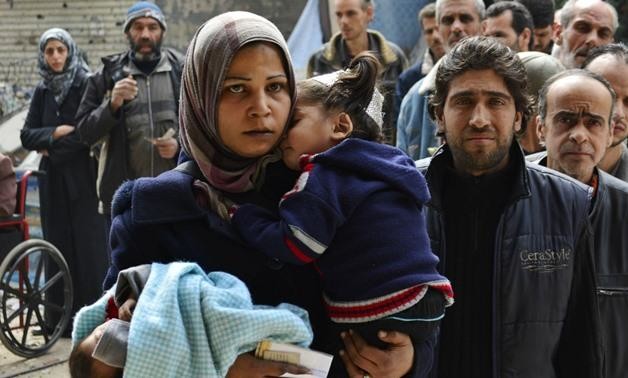
Palestinians fleeing conflict in Gaza and the West Bank are facing legal uncertainty in Germany, where most are currently granted only subsidiary protection instead of full refugee status.
In 2024, Germany recorded 634 asylum applications from Palestinians. By mid-2025, this number had dropped to just 185.
Many Palestinians have historically been denied full refugee status because they fall under the care of the UN Relief and Works Agency (UNRWA), a body created in 1949 to support Palestinian refugees.
UNRWA operates in Gaza, the West Bank, Jordan, Lebanon, and Syria. However, the agency is no longer able to operate in Gaza following a ban by the Israeli parliament.
This situation has raised concerns about the continued validity of Germany’s policy of granting only subsidiary protection to Palestinians.
According to Article 1d of the Geneva Convention, Palestinians should be granted full refugee status if UNRWA can no longer provide support.
A European Court of Justice ruling in June 2024 also backed this position.
German advocacy groups such as the Refugee Council of Lower Saxony are now helping Palestinians to argue for this legal recognition.
In Germany, full refugee status offers better long-term prospects, including permanent residency after three years and more opportunities for family reunification.
In contrast, those with subsidiary protection must wait at least five years for permanent residency, and a recent policy change has suspended family reunification for this group for the next two years.
Some German politicians are now pushing for a change.
Left Party lawmaker Clara Bünger has urged authorities to grant full refugee status to Palestinians from Gaza, citing the devastating conditions there and the unlikelihood of return.
One Palestinian man, who arrived in Germany in 2022 seeking treatment for his ill daughter, shared that his daughter later died and his son was killed in a rocket strike.
His wife remains in Gaza, where their home has been destroyed. He is uncertain about his future in Germany.