
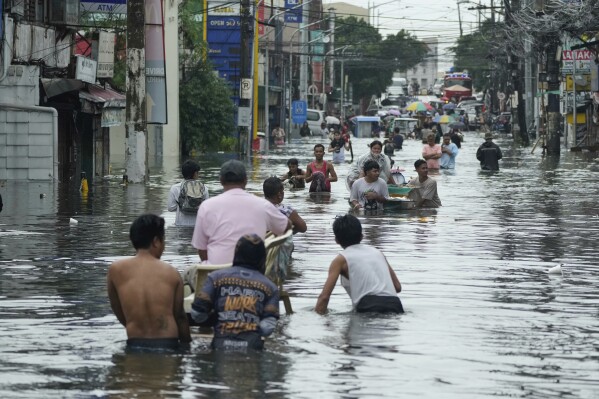
Tropical Storm Co-may swept across the northern Philippines on Friday, adding to more than a week of heavy rain and severe weather that has left at least 25 people dead.
The storm, known locally as Emong, brought strong winds and heavy rain, worsening floods and landslides across many areas.
The storm made landfall Thursday night in Agno town, Pangasinan province, as a typhoon with wind speeds reaching 120 kilometers per hour (74 mph) and gusts up to 165 kph (102 mph).
By Friday morning, it had weakened slightly, with sustained winds down to 100 kph (62 mph) as it moved northeastward.
Co-may increased the effects of the seasonal monsoon, which has already affected a large part of the country for over a week.
Most of the 25 reported deaths were caused by landslides, electrocution, falling trees, and flash floods. At least eight individuals remain missing.
Although there were no confirmed deaths directly caused by Co-may, it disrupted daily life across Luzon. Schools were shut in Manila for a third day, and classes were suspended in 35 provinces.
Over 77 towns and cities declared a state of calamity, allowing faster access to relief funds and freezing prices of basic goods.
Nearly 278,000 people have been displaced, taking shelter in evacuation centers or with relatives. Close to 3,000 homes have suffered damage.
Roads have been blocked by floods, landslides, and fallen debris, making travel by air and sea difficult in affected areas.
Thousands of soldiers, police, and volunteers have been working to rescue those stranded and deliver aid.
President Ferdinand Marcos Jr., after his visit to the United States, visited evacuation centers in Rizal province and later met with disaster officials to address ongoing challenges.
The United States has offered military aircraft to assist in transporting aid to isolated regions if needed.
The Philippines faces around 20 typhoons each year and remains one of the most disaster-exposed nations globally due to its location in the Pacific.