
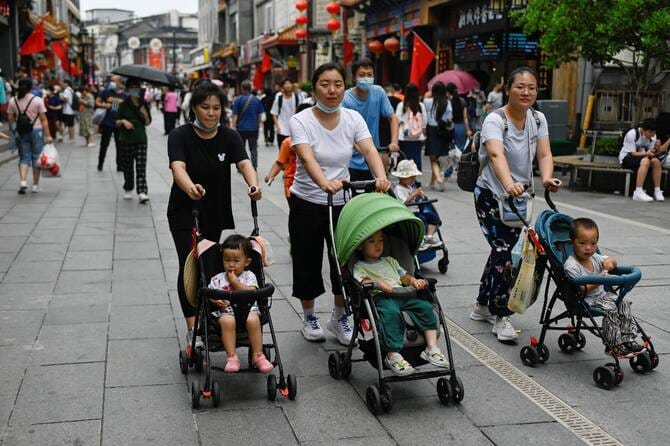
China has introduced a yearly subsidy of 3,600 yuan (around $500 or €429) for each child under the age of three, aiming to support parents and slow the country’s declining birth rate.
The new policy is part of a broader effort to reduce the financial strain of raising children and encourage families to grow.
The country’s population has fallen for the third year in a row. In 2024, China recorded just 9.54 million births—only half the number seen in 2016, the year when its long-standing one-child policy came to an end.
At the same time, marriage rates have dropped to record lows, with many young couples choosing to delay or avoid having children due to high living costs and career pressures.
In response, more than 20 provinces and regions across China have introduced additional financial incentives.
For instance, Hohhot in Inner Mongolia now offers up to 100,000 yuan for each child beyond the second, while Shenyang in Liaoning province gives 500 yuan per month for third children until they turn three.
Sichuan province is also looking to ease pressure on families by extending marriage leave from 5 to 25 days and increasing maternity leave from 60 to 150 days.
While experts view these new measures as a shift toward more direct family support, many believe the amount of money offered may not be enough to significantly change current family planning choices or boost domestic spending.
Some parents say the support is helpful, but not enough to fully ease the costs of raising multiple children.
For many, one child remains the more manageable option despite government efforts to reverse population trends.