
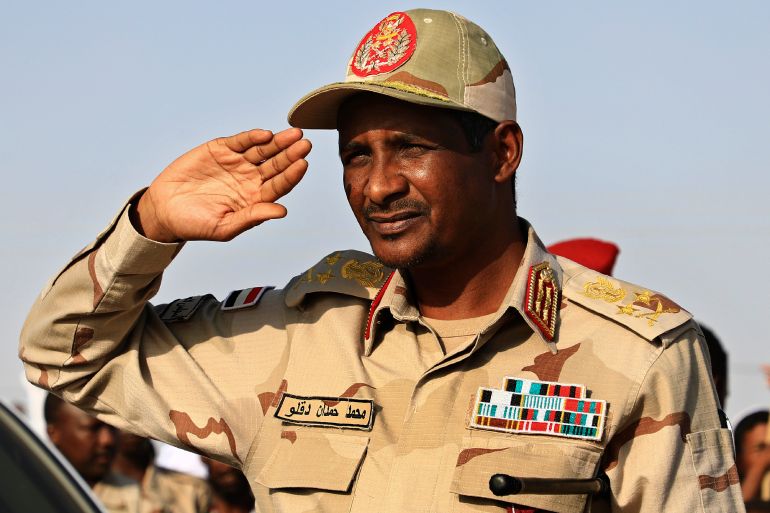
A powerful paramilitary group in Sudan, the Rapid Support Forces (RSF), has created a parallel government in parts of the country it controls, mainly in the war-torn western region of Darfur.
This development comes as Sudan remains in crisis following a violent power struggle that erupted in 2023 between the national army and the RSF.
The newly formed administration was announced from the city of Nyala, currently held by the RSF and its allied Janjaweed forces.
The RSF-led coalition, known as the Tasis Alliance, named RSF commander Gen. Mohamed Hamdan Dagalo as head of the sovereign council.
This 15-member council now claims to serve as the head of state in the RSF-controlled areas.
Dagalo, a central figure in the ongoing conflict, previously led the Janjaweed militias, which were widely accused of brutal attacks and mass killings during the Darfur conflict two decades ago.
His forces are again facing international accusations of war crimes, with the United States imposing sanctions and accusing them of committing genocide—a charge the RSF denies.
Alongside Dagalo, Mohammed Hassan al-Taishi, a former civilian official from the transitional council after the 2019 fall of Omar al-Bashir, was appointed as prime minister.
Rebel leader Abdelaziz al-Hilu of the Sudan People’s Liberation Movement-North (SPLM-N), based in South Kordofan, has been named deputy in the council.
The RSF’s move comes five months after the group and its allies signed a charter in Nairobi, Kenya, where they agreed to establish a separate government.
That move drew strong criticism from countries including the U.S., which rejected the RSF’s draft “transitional constitution” presented during the conference.
Sudan’s internationally recognized government in Khartoum dismissed the RSF-led administration, calling it illegitimate and warning foreign governments not to engage with it.
Critics fear this development could further split Sudan into rival administrations, mirroring the divided political landscape seen in neighboring Libya.