
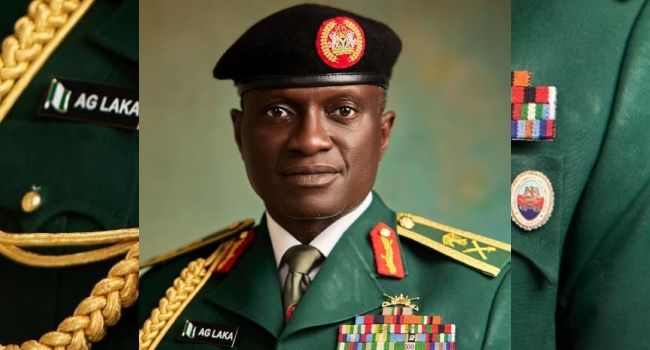
By SUNDAY ABBA, Abuja
The Coordinator, National Counter Terrorism Centre, Office of the National Security Adviser (NCTC-ONSA), Major General Adamu Laka, has reaffirmed the commitment of the Federal Government of Nigeria (FGN) to ending kidnap economy in the country.
General Laka stated this while briefing newsmen on the activities of the Multi-Agency Anti-Kidnap Fusion Cell in collaboration with the United Kingdom – National Crime Agency on Tuesday in Abuja.
He said the centre had officially launched the State Expansion Programme of the Multi-Agency Anti-Kidnap Fusion Cell, bridging a critical gap between national security coordination and state-level tactical response.
The National Coordinator noted that kidnapping in Nigeria was no longer a random crime, but an industry being ran by sophisticated and well-armed criminal networks that thrive on fear and fund violence through ransoms.
According to him, the programme was aimed at dismantling that economy by connecting national strategy with boots-on-ground action.
He said the fusion cell was created in partnership with the United Kingdom’s National Crime Agency (NCA) to facilitate high-profile rescues and breaking up kidnapping rings across the country.
The national coordinator noted that kidnapping in Nigeria was no longer a random crime, but an industry being ran by sophisticated and well-armed criminal networks that thrive on fear and fund violence through ransoms.
According to him, the programme was aimed at dismantling that economy by connecting national strategy with boots-on-ground action.
He said the fusion cell was created in partnership with the United Kingdom’s National Crime Agency (NCA) to facilitate high-profile rescues and breaking up kidnapping rings across the country.
General Laka noted the cell had played key roles in supporting rescue operations, disrupting kidnapping networks, and improving interagency coordination.
According to him, experience has shown that while national coordination is crucial, state-level engagement is also indispensable.
“Too often, real-time intelligence, local knowledge, and operational readiness reside with field commands, while national coordination can only succeed when it is informed by ground realities.
“This is the primary purpose of this programme – to close the gap between national-level coordination and state-level response. Essentially, to build direct operational linkages between the Cell and state commands across the country,” Laka said.