
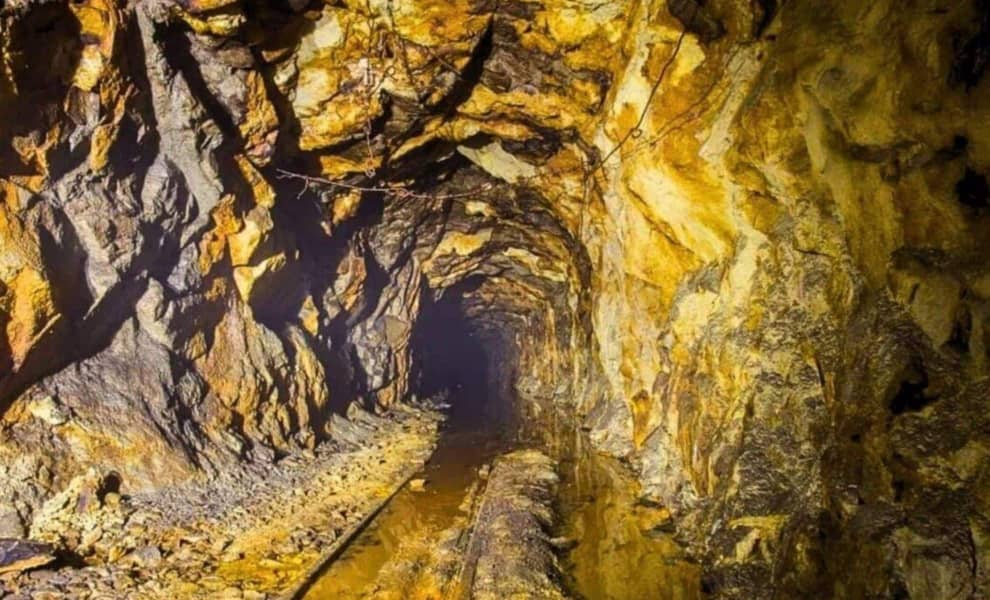
A huge gold deposit has been discovered in southern China, in Pingjiang County, Hunan Province.
This underground site is now believed to contain one of the world’s largest known gold reserves.
Early findings suggest the area holds around 1,100 tonnes of gold, with a total estimated market value of approximately $83 billion.
This major discovery was made beneath the existing Wangu gold field, where experts used advanced drilling methods and underground mapping.
Over 40 gold veins were found at depths reaching nearly 3,000 meters.
The quality of the gold ore is unusually high, averaging about 138 grams per tonne, much higher than what is typically seen in global mining operations.
This gold deposit could shift China’s position in the global gold industry.
Although China already produces large amounts of gold, it still relies heavily on imports to meet demand.
With this new find, China may be able to reduce its need for foreign gold while boosting domestic mining operations.
There is still a long road ahead before extraction begins. Deep mining at such levels comes with major technical and environmental challenges.
Detailed testing, planning, and environmental studies will be needed before full-scale mining can start.
Officials and researchers will likely carry out further inspections to confirm the full size and quality of the deposit.
While no official timeline has been set, early estimates suggest that preparation and development work could continue into 2026 or beyond.
If fully developed, this site could become the largest gold-producing area in China and one of the top in the world.
This discovery has drawn attention from investors and markets, pushing up global gold prices and raising new interest in deep mining technology.