
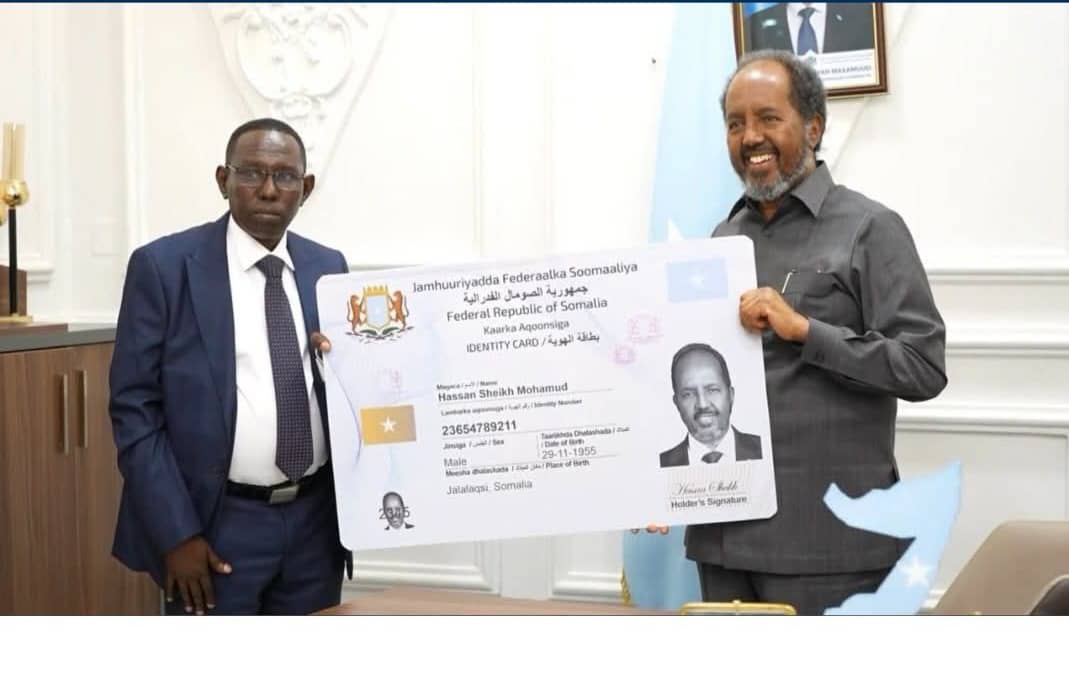
The Central Bank of Somalia has introduced a new rule that requires citizens to present a national identification card before using any banking services.
This decision aims to prevent financial crimes and increase confidence in the banking system.
The regulation will apply to everyday banking activities such as opening bank accounts, making payments, depositing and withdrawing money, and applying for loans.
It was developed together with the National Identification and Registration Authority (NIRA) and the Somali Bankers Association.
Somalia has not had a central ID system for over three decades, following the fall of Siad Barre’s government in 1991.
Since then, the country relied on informal methods like clan ties, personal networks, and foreign documents to verify identity.
A biometric national ID system was introduced in September 2023, first in Mogadishu.
Since then, it has been expanded to other regions such as Galmudug, Hirshabelle, and Las Anod in the SSC-Khaatumo area.
The new banking rule will begin in Benadir region, including Mogadishu, before expanding across the country.
It supports Somalia’s broader transformation strategy adopted in March 2025, which includes digital government services, rebuilding state institutions, and improving access to services.
The government has also passed data protection laws to support the ID system.
Public and private service providers are now expected to connect services like healthcare, education, and welfare programs to the national ID system.
NIRA has set a target to issue ID cards to 15 million Somali citizens, including children, by the year 2026.
Authorities believe the new system will improve access to services and help in tackling crime, terrorism, and misuse of public resources by making identification clear and reliable.