
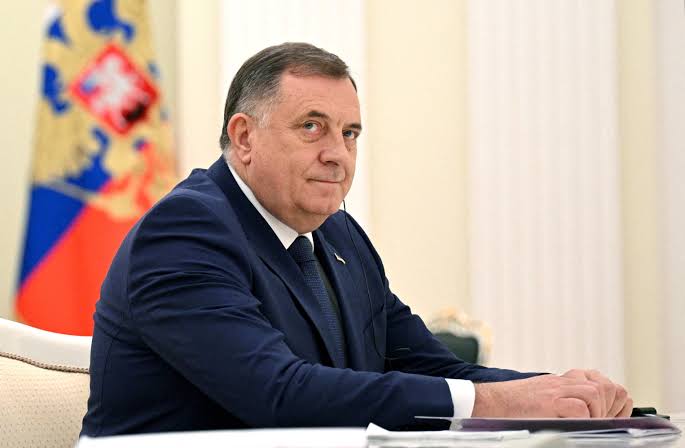
A Bosnian appeals court on Friday upheld a previous ruling against Milorad Dodik, the president of Republika Srpska, sentencing him to one year in prison and banning him from holding political office for six years.
The decision comes amid growing concerns over stability in Bosnia-Herzegovina, where Dodik’s separatist efforts continue to stir unease.
Dodik, known for his close ties with Russia, is unlikely to serve the sentence anytime soon.
He maintains strong support from neighboring Serbia, where he could seek refuge, and from Russian President Vladimir Putin, who has hosted him multiple times since the initial verdict was issued in February.
Over the years, Dodik has pushed for Republika Srpska, the Serb-dominated region of Bosnia, to break away and unite with Serbia.
These efforts have drawn international backlash, including U.S. sanctions against him and his associates.
Accusations of corruption and alignment with Russian interests have also followed him.
His repeated threats of secession have caused alarm across Bosnia.
The country still carries deep scars from the 1992–1995 war, when Bosnian Serbs opposed the country’s independence from Yugoslavia and attempted to form their own territory.
The conflict led to around 100,000 deaths and the displacement of millions.
The U.S.-brokered Dayton Agreement brought an end to the war, dividing Bosnia into two main regions: Republika Srpska and the Bosniak-Croat Federation.
Each has significant autonomy, but some national institutions like the military and judiciary remain shared.
The presidency is also split among Bosniak, Serb, and Croat leaders, with rotating leadership.
Dodik continues to reject the authority of Christian Schmidt, the international peace overseer assigned under the Dayton deal.
Schmidt has the power to change laws and impose decisions, but Dodik has claimed his rulings are invalid in Republika Srpska, further complicating efforts to maintain peace in the region.