
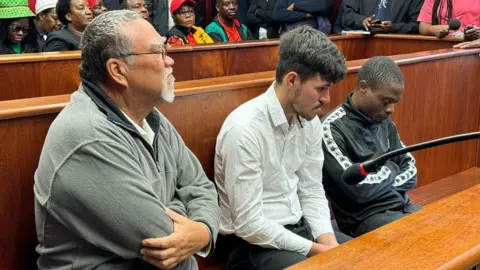
A murder case involving the alleged killing of two black women on a farm in South Africa has stirred national outrage and deepened racial tensions in the country.
Adrian de Wet, a 20-year-old white farm worker, claims he was forced to dispose of the bodies by feeding them to pigs after the women were shot by the farm owner.
De Wet is one of three men charged in connection with the deaths of Maria Makgato, 45, and Lucia Ndlovu, 34.
The women had reportedly been collecting leftover dairy products intended for pig feed at a farm near Polokwane in Limpopo province when they were killed in 2024.
According to court proceedings, De Wet has turned state witness.
He accuses farm owner Zachariah Johannes Olivier, 60, of shooting the women. De Wet claims he was acting under duress when he threw their bodies into a pig enclosure in an attempt to destroy evidence.
If his testimony is accepted by the court, charges against him may be dropped.
Both the prosecution and De Wet’s lawyer support his account that he was coerced into the act.
The third accused, 50-year-old William Musora — a Zimbabwean national — is also a farm worker.
He remains in custody along with Olivier. Both have not yet entered formal pleas. Musora faces additional charges under immigration laws due to his undocumented status in South Africa.
All three men face charges of murder, attempted murder for allegedly shooting at Ms. Ndlovu’s husband, possession of an unlicensed firearm, and obstructing justice for allegedly attempting to destroy the bodies.
The trial, held at the Limpopo High Court, has drawn crowds including supporters, victim families, and political activists.
Among them were members of the Economic Freedom Fighters party, which has previously demanded the farm be closed.
The case has sparked widespread anger, particularly over its racial and class implications in a country still grappling with the legacy of apartheid.
Much of South Africa’s farmland remains owned by white citizens, while the workforce is largely black and underpaid — creating deep resentment and mistrust in rural communities.
The hearing was postponed and is expected to resume next week.