
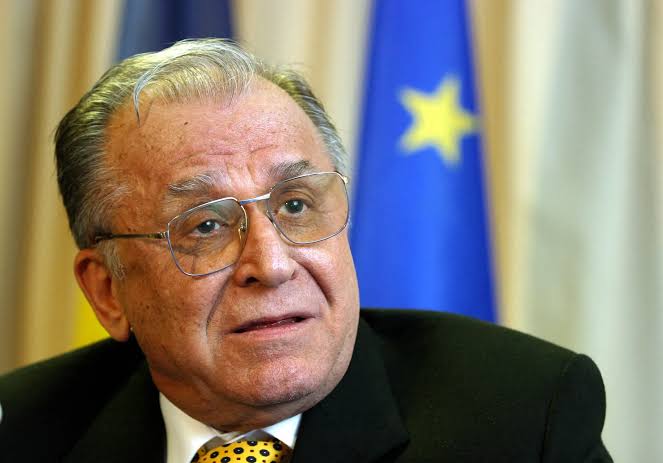
Former Romanian President Ion Iliescu has passed away at the age of 95, marking the end of a key figure in the country’s modern history.
He died in Bucharest after battling lung cancer. In early June, he had been admitted to the hospital for treatment.
Iliescu played a major role in Romania’s shift from communist rule to democracy.
He served as president during two separate terms, first from 1989 to 1996 and again from 2000 to 2004.
He was the first president to be elected after the fall of communism.
His time in office was closely tied to the events of the 1989 revolution that ended Nicolae Ceaușescu’s rule.
While many saw him as a steady figure during a difficult transition, his presidency was also filled with controversy.
Iliescu faced serious allegations related to the violent unrest that followed the collapse of communism.
In 2019, he was charged with crimes against humanity due to his role in the 1989 uprising, though he was never convicted.
He was also indicted in a separate case involving the violent suppression of protests in 1990, where miners were brought in to stop student demonstrations.
This event, known as the Mineriad, caused global concern.
Born on March 3, 1930, in the southern city of Oltenița, Iliescu was active in Romanian politics for decades.
In recent years, he stayed out of the public eye, though he occasionally posted written updates on his personal blog.
His last message, published in May, was addressed to Bucharest’s mayor, offering congratulations for a recent political win.
He had also undergone heart surgery in 2019 and continued receiving medical care until his recent hospitalisation.
A state funeral will be organised, with more details to be shared by Romanian authorities.