
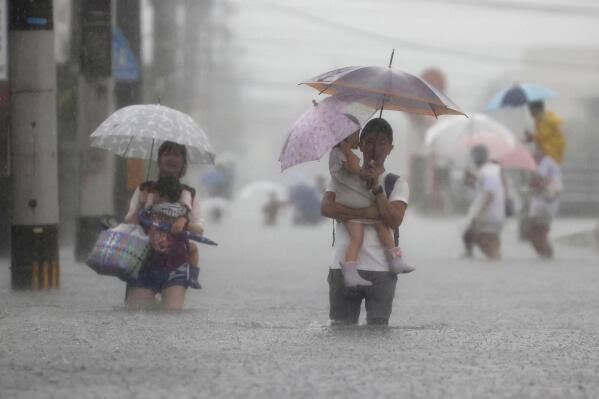
Southern Japan’s Kyushu island was struck by torrential downpours on Friday, unleashing floods and landslides that forced many residents into shelters.
Authorities raised their warning scale to the highest level in parts of the region.
Kirishima city in Kagoshima Prefecture recorded nearly 500 mm (around 20 inches) of rainfall in just 12 hours, setting new local records for short-term precipitation.
The Japan Meteorological Agency (JMA) cited a low-pressure system as the cause of continued heavy rain and thunderstorms expected to persist through Friday.
In Aira city, a deadly mudslide buried a home, but two occupants were rescued alive and taken to hospital.
The Fire and Disaster Management Agency advised evacuation for more than 360,000 people across Kagoshima and nearby Miyazaki prefectures.
Visuals from television broadcasts showed rivers overflowing and rushing floodwaters.
In Kirishima, water filled a shopping mall up to knee height.
The deluge paralyzed local transport networks—trains and buses stopped running, and dozens of flights to and from Kagoshima were canceled.
In response, Prime Minister Shigeru Ishiba’s government convened an emergency task force focused on relief efforts and safeguarding lives.
Residents were urged to act quickly as JMA warned of worsening conditions and elevated risk of disasters
Japan has weathered similar crises before, such as the 2020 Kyushu floods, when record rains triggered mass evacuations and dozens of fatalities.
Kyushu’s recurrent exposure to extreme rain events underscores the challenges of disaster preparedness in a changing climate, highlighting the critical importance of timely warnings and coordinated government response.