
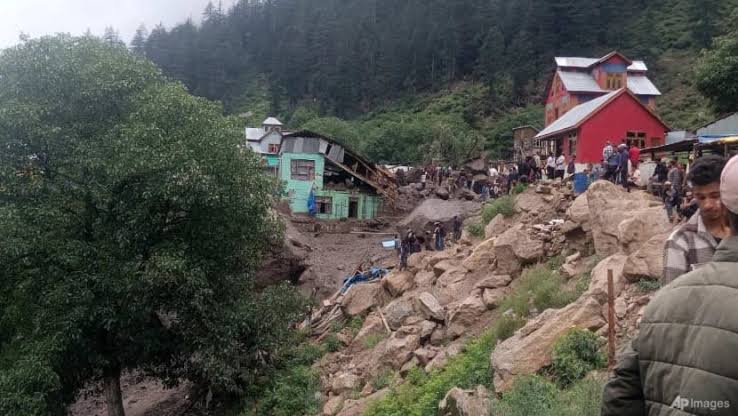
At least 37 people have died and around 150 others were injured after sudden floodwaters swept through Chositi, a remote Himalayan village in Indian-administered Kashmir.
The incident occurred on Thursday following a powerful cloudburst in Kishtwar district, marking the second deadly flood in the region in August.
The victims included Hindu pilgrims who had been resting during their journey to the Machail Mata shrine.
More than 50 of the injured are reported to be in critical condition.
Local officials said the torrents struck without warning, destroying parts of the settlement and sweeping away temporary structures, including a large kitchen set up for the pilgrims.
Authorities believe more bodies may be recovered as search efforts continue.
Rescue operations are underway, with the National Disaster Response Force and army units sent to the disaster site, which is over 200 kilometers from Srinagar, the region’s main city.
News footage from the area showed fast-flowing water carrying debris, damaged homes, overturned vehicles, and thick layers of mud and rock.
Indian Prime Minister Narendra Modi pledged assistance to those affected, while local authorities are focusing on providing medical aid and relocating survivors to safer locations.
The disaster follows another devastating flood earlier this month in Dharali, Uttarakhand, where more than 70 people are feared dead after flash floods on August 5.
Both events highlight the growing vulnerability of Himalayan communities during India’s June–September monsoon season.
Floods and landslides are a recurring hazard in this period, but scientists warn that climate change is intensifying rainfall patterns, making extreme weather events more frequent and more destructive.
Poor infrastructure and unregulated development in fragile mountain terrain further amplify the risks.
The United Nations’ World Meteorological Organization has previously described extreme floods and droughts as urgent warning signs of an increasingly unstable global water cycle, with mountainous regions like the Himalayas among the most exposed.
Authorities in Kashmir remain on high alert as weather forecasts predict further heavy rainfall in the coming days, raising fears of more flooding and landslides in already vulnerable districts.