
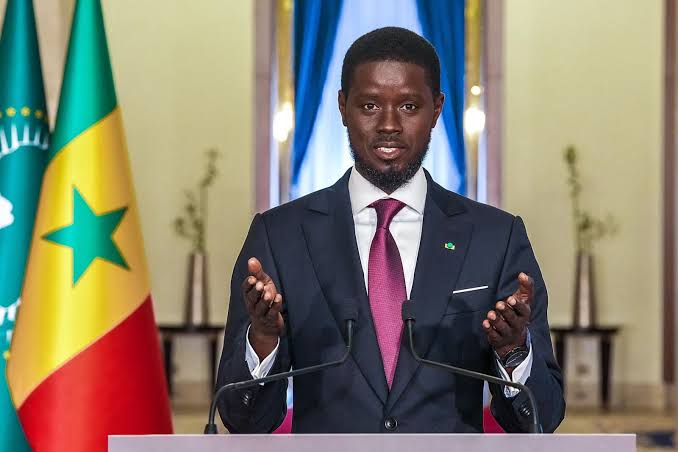
Senegal has introduced a new financial transparency law requiring more public officials to declare their assets, though President Bassirou Diomaye Faye is not included.
The amendment expands the 2014 asset declaration rules to cover a wider range of high-ranking officials.
If approved, the law will require public prosecutors, investigating judges, local authorities, auditors, and directors of public companies to report their assets at the beginning and end of their terms.
Previously, only senior officials, including the President of the National Assembly, the Prime Minister, ministers, and public accountants managing more than 1 billion CFA francs (€1.5 million), were obligated to declare assets.
The new rules also lower the reporting threshold for public budget managers from 1 billion CFA francs to 500 million CFA francs (€760,000), increasing oversight of financial activity.
The National Assembly is expected to vote on the bill on August 18, 2025.
Opposition leaders have criticized the law for leaving the President exempt. Doudou Wade of the Senegalese Democratic Party argued that true transparency requires the President to follow the same standards as other officials.
A ruling party lawmaker defended the exemption, noting that the Constitution mandates the President to declare assets only at the start of the term, taking precedence over other laws.
Senegal is still facing the financial consequences of the previous administration under former President Macky Sall.
A public audit in February 2024 revealed that Sall’s government had understated budget deficits, raising the country’s debt ratio to around 100 percent of GDP by the end of 2023, up from the previously reported 74 percent.
The IMF suspended funding, and Senegal’s credit rating dropped to B minus.
Since taking office, Faye has taken action against alleged corruption in the former administration, arresting five former ministers.
Most recently, Amadou Mansour Faye, Sall’s brother-in-law and former Minister of Community Development, was charged with embezzling more than $4.6 million in public funds.
The new law is seen as a step toward improving financial oversight in Senegal, but critics warn that excluding the President could limit public confidence in the government’s commitment to transparency.