
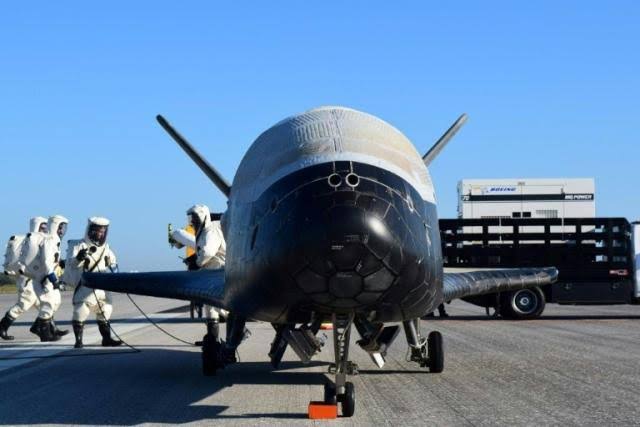
A SpaceX rocket successfully launched a classified U.S. military spacecraft into orbit on Thursday night, August 21, 2025, marking the beginning of its latest mission focused on cutting-edge space technologies.
The uncrewed spacecraft—built by Boeing and operated by the U.S. Space Force—lifted off from Cape Canaveral.
Designed as a reusable spaceplane, it carries advanced experimental payloads, including laser communications systems and a high-performance quantum inertial sensor, both aimed at enhancing the resilience and security of U.S. space-based communications.
Mission duration remains undisclosed, but past flights have ranged from several months to over a year in orbit, testing new orbital regimes, next-gen domain awareness technologies, and fuel-efficient return maneuvers (like aerobraking).
These versatile spacecraft measure approximately 30 feet (9 meters) long with a 15-foot wingspan and have been in use since 2010.
China has expressed concern over the growing military role in the U.S. space program.
Chinese analysts and officials suspect such missions may signal a new form of space weaponry capable of disrupting enemy orbital assets—a viewpoint underscoring the deepening mistrust between the superpowers in space affairs.
Further adding to international anxiety, U.S. and other defense officials view space as an emerging battlefield.
Concepts like satellite “dogfights,” AI-controlled drones, and spacecraft designed for combat maneuvers highlight rising strategic tensions in orbit, particularly amid fears of conflict spreading beyond Earth’s surface.
At a recent security summit, U.S. Space Force leadership warned of sophisticated threats posed by China’s “kill web”, a network of satellites geared for real-time targeting—alongside Russian pursuits of anti-satellite weapons and space-based nuclear capabilities.
These developments amplify the stakes in the U.S. push for space dominance and technological superiority.