
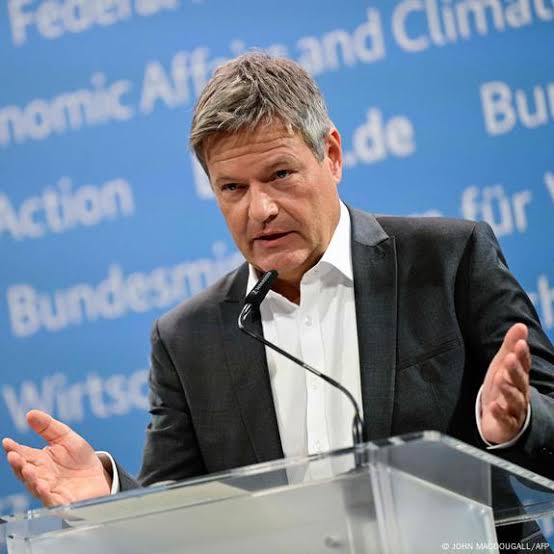
Robert Habeck, former Vice Chancellor and Economic Minister of Germany’s Green Party, has announced he will step down from his seat in the Bundestag on September 1.
His decision brings an end to a political career that saw him rise as one of the Greens’ most prominent figures while navigating years of turbulence in German politics.
Habeck entered national leadership as part of the traffic light coalition, which was formed in December 2021 with the Social Democrats (SPD) and the Free Democrats (FDP).
That alliance broke down in November 2024 when the FDP withdrew, forcing a snap election in February 2025.
The Greens secured only 11.6 percent of the vote, pushing them into opposition and limiting Habeck’s influence on policy decisions.
During his time in government, Habeck oversaw Germany’s response to the 2022 energy crisis triggered by Russia’s invasion of Ukraine.
He played a central role in cutting reliance on Russian gas while speeding up investment in renewable energy and securing liquefied natural gas supplies from countries such as Qatar.
He also introduced the Building Energy Act, requiring new heating systems to rely heavily on renewable energy sources.
The law sparked debate across the country, with critics raising concerns over cost and feasibility.
Although Habeck had aimed to continue shaping policy on climate protection and economic reform, divisions within his party grew sharper.
His backing of stricter immigration rules clashed with the Greens’ left wing, leaving him politically isolated in recent years.
Looking ahead, Habeck will turn to academic work outside Germany.
He plans to spend the next year teaching and conducting research at institutions including the Danish Institute for International Studies in Copenhagen and the University of California, Berkeley.
He described this new direction as a way to broaden his perspective after stepping away from frontline politics.
Robert Habeck’s resignation closes a chapter for the Greens at a time when the party faces challenges in rebuilding its influence and preparing for future elections.