
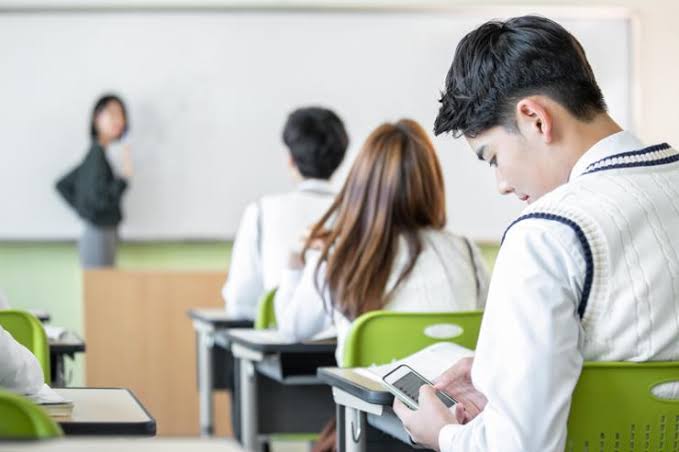
South Korea has approved a nationwide ban on mobile phones and smart devices in classrooms, a move that will take effect from March 2026.
The new law, passed with strong support in parliament, is designed to tackle growing concerns about smartphone dependency among students.
Lawmakers behind the bill argue that excessive phone use is harming academic performance, limiting social interaction, and increasing exposure to cyberbullying.
A government survey in 2024 found that nearly 43% of South Koreans aged 10 to 19 struggled to control their smartphone use, more than double the national average.
Parents and teachers have expressed worries that children are spending more time on screens than on studying, building friendships, or engaging in extracurricular activities.
The law bans phone use during school hours but allows exemptions for emergencies, disabilities, or approved educational purposes.
Teachers will also have greater authority to restrict phones on school grounds. While many schools had already introduced informal bans, this legislation creates a binding national framework.
Teachers’ groups are divided. The Korean Federation of Teachers’ Association welcomed the move, saying most teachers report frequent classroom disruptions linked to phone use.
Others, however, argue that the law overlooks deeper pressures such as South Korea’s intense college entrance exam system, which drives long hours of study and stress.
Some students also feel the measure is ineffective, noting that phone use will continue outside school.
South Korea now joins countries including France, Italy, and China, which have also restricted phone use in schools.
But unlike most, South Korea has embedded the ban in law, making it one of the strictest global approaches.
Supporters believe the change will create healthier study environments, while critics caution that without broader education reforms, the issue of screen dependence will persist.