
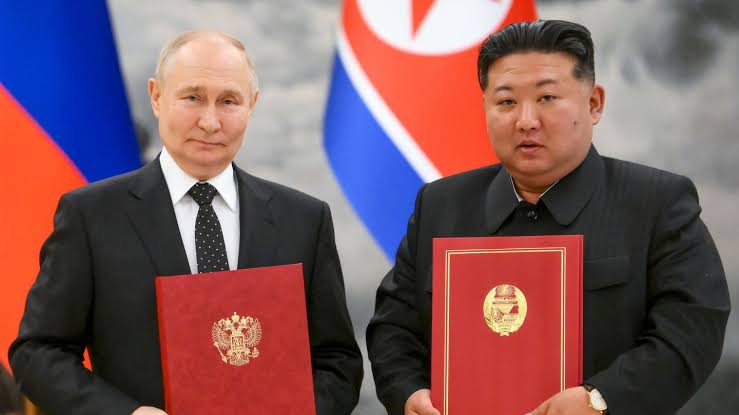
China will welcome North Korean leader Kim Jong Un and Russian President Vladimir Putin to Beijing in early September for a large-scale military parade marking the end of World War II.
The event, scheduled for September 3, will commemorate Japan’s surrender in 1945 and is expected to be one of the most prominent diplomatic gatherings hosted by Beijing in recent years.
The parade, known as “Victory Day,” will take place in Tiananmen Square under the leadership of President Xi Jinping.
It will showcase a broad range of China’s military strength, including advanced missile systems, stealth aircraft, drone defense technology, and hypersonic weapons.
Tens of thousands of soldiers are set to participate, making the display a major demonstration of Beijing’s growing military capabilities.
For Kim Jong Un, the visit is particularly notable. It marks his first trip to China since 2019 and only his second foreign visit since the pandemic.
Analysts say his presence highlights a push to reinforce ties with Beijing while also projecting an image of international relevance.
North Korea continues to face heavy sanctions over its nuclear program, and closer engagement with China could offer Pyongyang much-needed economic and political support.
Putin’s attendance underscores Moscow’s efforts to counter global isolation following its invasion of Ukraine.
With more than 20 other world leaders expected at the parade and the Shanghai Cooperation Organization summit in Tianjin just days earlier, Russia seeks to present itself as a central player in Eurasian politics rather than a sidelined power.
The gathering of Xi, Putin, and Kim will signal a joint front among the three countries at a time when Western leaders remain absent.
Observers view the parade as both a commemoration of past conflict and a pointed reminder of current divisions in global politics.