
By SUNDAY ABBA, Abuja
A call has gone out to the Federal Government of Nigeria (FGN) to consider renaming the Ministry of Steel Development expanding the scope of its statutory mandate to cover the entire metal value chain and pave way for unimpeded growth of the industry known to be the spring board for the industrial development of nations.
Prof Benjamin Adewuyi of the Federal University of Technology Akure made the call while presenting his paper at the just concluded 2025 National Steel Summit Themed ‘Rebuilding and Consolidating
Nigeria’s Steel Industry: Collaborative Action For Sustainable Growth and Global Competitiveness in Abuja.
In the presentation titled, “Bridging the Gap in Nigeria’s Steel Industry: Human Capital, Technical Skills, and Institutional Readiness for Industrial Growth,” Prof. Adewuyi said, “Presently, the mandate covered by the Ministry of Steel Development stated as “carrying out potentials for steel development.
“This is not only ambiguous but gives room for neglecting other vital activities in the metal sector. This lack of coverage of essential activities has left a very serious gap in human capacity, technology development, operations and other activities.”
He noted that the scope gap is detrimental to the overall metal development because for the ministry
to stay within its steel-focused mandate inadvertently created a gap which conspicuously hinders activities in
the entire metal sector.
“To bridge this gap, the mandate of the Ministry of Steel Development should be expanded to cover a wider scope of activities in the metallurgical midstream and downstream sectors with a change of name from “Ministry of Steel Development” to the “Ministry of Metal Development for better productivity and economic growth.
“Having a Ministry of Metal Development will bring metallurgical enterprises under a unified umbrella to plan and develop essential products not only steel, but also other metal products,” he said.
According to him, there’s knowledge misconception regarding metallurgy and steel which constitutes one of the greatest challenges bedeviling the industry in Nigeria.
“Metallurgy is the science, production and application of METALS involving extraction, refining or purification from either ferrous or nonferrous ores. Metals are either ferrous (iron, steel and alloys) or nonferrous (Aluminium, Titanium, Copper, Gold, Tin, Vanadium, Lithium etc).
“It is pertinent to mention that steel, even though highly essential, is one out of many by-products of metallurgy and the development of steel requires
addition of other metals to produce desirable steel alloys,” Prof. Adewuyi explained.
According to the expert, gaps (which he also termed cracks) of varying dimensions and degrees exist in the Nigerian steel industry, which he categorised as artificial, knowledge and application, infrastructural, technological and operational, human capacity, technological and operational, technical skills, policy and implementation gaps among others.
Blaming lack of political will to revive the all important sector over the years, Professor Adewuyi said with the gaps created, “we continue to spend about $3.3 billion to import steel annually. Despite having more than 30 steel manufacturing industries, our local production of steel is less than 2.5 million tonnes a
year”.
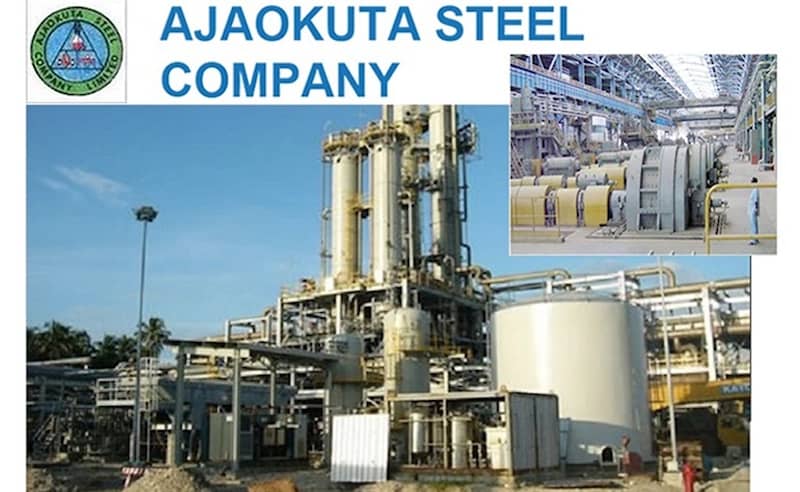
On bridging the artificial gaps in Nigeria’s steel industry, Prof. Adewuyi who used the Ajaokuta Steel Company as a case study said, “This is an industry that was once envisioned as the cornerstone of Nigeria’s industrial revolution; Ajaokuta Steel has remained dormant due to gaps created by policy
inconsistency, underinvestment and bureaucratic inertia.
“There is need to close the gaps created
in the past through inappropriate economic priorities and decisions on concession, unbundling,
dismantling and selling out as scrap, closing, etc.”
He maintained that as an integrated steel plant all the units linked
together as a chain, if broken cannot function. Unbundling or separating any unit will render the entire steel plant useless.
According to him, the original builders of Ajaokuta – Russians should be recalled to come and complete, commission and then operate (a step already taken by the current government but suffered setback
due to lingering war between that country and Ukraine, according to an update recently given by the Minister of Steel Development, Prince Shuaibu Abubakar Audu), and the management
of the plant can commercialise some of the already commissioned and completed units after appropriate maintenance and digitalisation are carried out, so that at the appropriate time the government can decide on its privatisation.
Prof. Adewuyi, who detested the idea being peddled around, that Ajaokuta after being in the pipeline for over four decades, is now outdated and should be done away with, said lack of adequate knowledge and its application is responsible for some major gaps.
“How can we contemplate abandoning a well-articulated and technologically sound project instead of planning
how to expand and diversify its steel production development program?
How could we be comfortable that Nigeria has become dumping ground for 12 to 14 millions
tonnes of Steel and related products annually?,” he queried.
Continuing, he said, “We must bridge this gap and stop the major source of depleting much of the foreign exchange. Past Government’s insensitiveness that rendered
most of the installed 420 processing units in the Ajaokuta Steel Complex moribund must not
continue.
“The original builders designated the steel plant to produce up to 5.2 Mt of steel annually. The products include structural steels and can also accommodate production of military
hardware.
“This artificial gap can be removed with an initial plan to expand the production base of the Engineering Workshops (comprising the Foundry, Machine and forge shops, etc). This expansion will require the installation of EAFs for special alloys, precision casting units, installation of shaping machines in the machine shop and offsetting forging facilities etc.”
He said the advice to abandon the steel plant is to create room for importation and dominance of the steel market by foreign steel producers, suggesting the idea of starting the building of another steel plant in addition.
He opened that inviting willing investors to start another steel plant based on completely new technology should be considered whereby the federal government would give another green field for their steel project and leave Ajaokuta alone.
“Rather than creating more gaps of confusion, Government efforts should be concentrated on the rehabilitation, reactivation, completion, commissioning and continuous operations of the steel
project as mapped out by the original builders of Ajaokuta.
“The starting point of closing the gaps is to allow the designer of the project to carry out the technical auditing of the plant, and present the cost estimates for the rehabilitation, through to the completion and operationalisation of the project.
SUMMIT POST recalls that Minister of Steel Development Shuaibu Abubakar Audu while while fielding questions from pressmen recently in Abuja disclosed that the technical auditing of the project was underway and will soon be ready for the next line of action.
He recommended seamless synergy and coordination along the metal value chain: the upstream, midstream, and downstream.
“The metal sector value chain consists of four distinctive stages, spanning multiple industries in the upstream, midstream and downstream sectors. Inability to synergise the activities of these stages had left serious gaps in the steel industries and metal sector in general,” he said, adding that bridging the gap created by major raw material
deficiency in the midst of plenty is the first indication of seriousness in steel development.
On technical skills gap he said, “In many industries, lack of specialised training in metallurgy, fabrication, and metal production processes created gaps. Few institutions offer hands-on practical programmes tailored to steel
manufacturing, the best that is available is probably foundry, and unfortunately skilled professionals in this area had migrated abroad, leaving a vacuum in local expertise.
“Poor foundational education in science and engineering limits the pool of future steelworkers. Hopefully, the recent attempt by government to revive the technical schools will go a long way
to rectify this deficiency. Review of curricula in universities and technical colleges to align with the practical demands to develop entrepreneurial potentials, build capacity to enhance advanced technical skills in the steel and metal sector.”
He lamented what he described as limited public-private collaborations, saying government institutions
rarely partner effectively with industry players or academia, preferring to deal with foreign
investors.
According to him, the greatest casualty of all the gaps is manufacturing and industrialisation.
“Manufacturing makes things happen, build skills, create jobs and sustainable workforce. In China, manufacturing alone employs 215 million people, making 28% of the workforce. In Vietnam, manufacturing employs 15m
people, 30% of the workforce.
“Gaps in technical skill in the steel sector is responsible for the slow pace of our industrial development. China, a country that was in the category of developing nation 25 years ago is now rated as the world’s fastest developed country, with annual production of steel now over
1 billion tonnes,” he said.
He stressed that the importance of developing science and technology capacity in the steel and metal industry must be adequately reflected in the economic, research, and education policies and programmes of the government, adding that focus on local production of steel, alloys, and other metals will enhance growth and sustainable diversification in microeconomic and macroeconomics.
Concluding, he said, “Creating a conducive investment environment for micro, small, and medium capacity companies to thrive will bridge the gap created by project underinvestment in the steel and metal sector. The local market will have a large share in the metal industry. This will reduce the hardship being experienced by local steel producers. Creating enabling policies will reduce importation of metal products and increase local production.”