
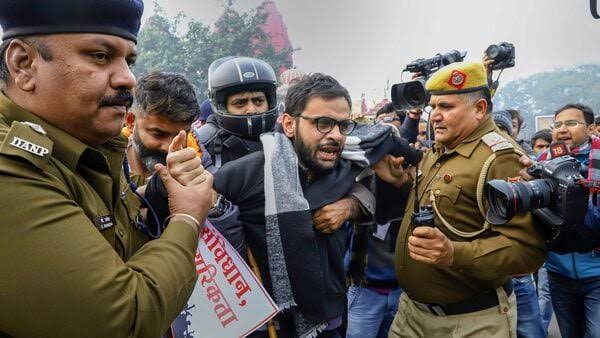
Delhi’s High Court on Tuesday rejected bail applications from nine individuals accused of conspiring to orchestrate the February 2020 riots in the Indian capital, despite nearly five years in custody without trial.
Among those denied bail were student activists Umar Khalid and Sharjeel Imam, both former leaders at Jawaharlal Nehru University.
The court, led by Justices Navin Chawla and Shalinder Kaur, dismissed all appeals, Indian media reported.
The case stems from violent unrest during protests against India’s controversial Citizenship (Amendment) Act (CAA) and the National Register of Citizens (NRC).
The clashes, which coincided with a high-profile visit by then–U.S. President Donald Trump, left 53 people dead and more than 700 injured.
Prosecutors argue the violence was not spontaneous but a “well thought-out conspiracy” designed to divide India and damage its reputation internationally.
They accuse the defendants of inciting unrest through speeches referencing sensitive issues such as the CAA, the Babri mosque demolition, Kashmir, and Hindu-Muslim tensions.
Defense lawyers counter that their clients have already spent years in pre-trial detention under India’s stringent anti-terror law, the Unlawful Activities (Prevention) Act (UAPA), which allows extended incarceration without conviction.
They also argued for parity, noting that other co-accused facing similar charges had been granted bail.
Khalid’s detention has drawn international attention, including from the U.S. Commission on International Religious Freedom, which said he was targeted for leading peaceful protests against the CAA.
With repeated delays in hearings, it remains unclear when — or if — the full trial will move forward.
Critics argue the prolonged incarceration highlights both the sweeping powers of the UAPA and the risks it poses to the principle of a speedy trial.