
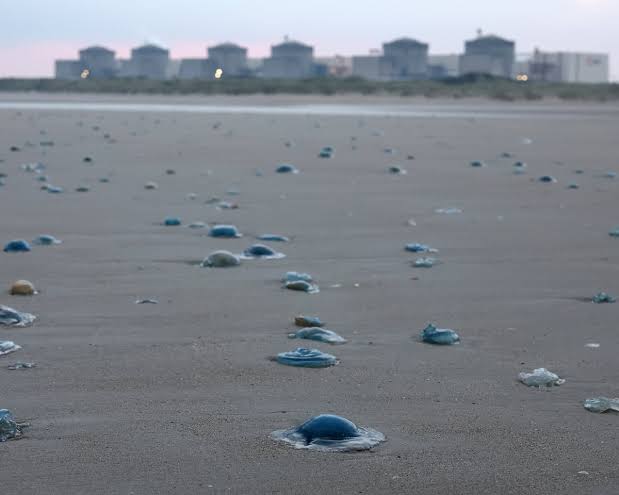
A swarm of jellyfish caused a sharp reduction in electricity output at France’s Paluel nuclear power plant on Wednesday, September 3, 2025.
Ride of marine life through the facility’s filters prompted safety measures by utility operator EDF, slashing output by 2.4 gigawatts — nearly half of the plant’s 5.2 GW capacity — after Reactor 4 was shut down and Reactor 3 had its output scaled back as a precaution.
Reactor 1 remains at full power, while Reactor 2 is offline for scheduled maintenance.
The plant draws cooling water from the English Channel, where warming temperatures have encouraged longer breeding seasons and larger swarms of both native and invasive jellyfish species.
EDF said algae-like creatures were drawn into the pumping system’s filters, prompting concerns over efficient cooling and operational safety.
This is the second jellyfish-related incident at a French nuclear facility in just one month.
In August, the Gravelines plant—cooled by outlets from the North Sea—experienced a massive jellyfish invasion that forced all four operational reactors offline when marine organisms clogged their cooling systems, triggering automatic shutdowns.
No safety or environmental hazards were reported, and gradual restarts followed once systems were cleared.
Experts warn such incidents are increasing across global ocean-cooled power plants due to warming seas, invasive species, habitat loss, and overfishing—all factors that contribute to jellyfish population explosions.