
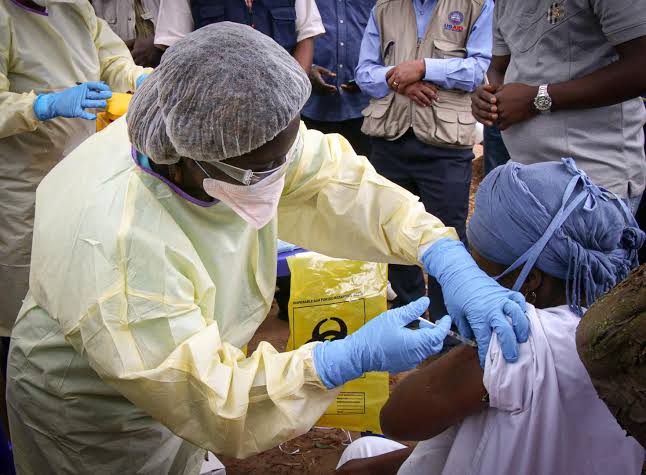
The Democratic Republic of Congo (DRC) has moved quickly to respond to a new Ebola outbreak in the Kasai region by deploying part of its emergency vaccine stockpile.
Authorities in Kinshasa confirmed that 2,000 doses of the Ervebo vaccine, effective against the Zaire strain of the virus, will be transported to the affected area.
These doses are reserved for frontline health workers and people who have been in close contact with confirmed cases, in a bid to prevent further spread.
Ebola is a rare but severe viral hemorrhagic fever, with fatality rates averaging around 50%, though some outbreaks have seen rates between 25% and 90%.
Early symptoms include fever, sore throat, headaches, and muscle pain, progressing in many cases to vomiting, diarrhea, rash, organ dysfunction, and, in some patients, internal or external bleeding. Death is often caused by shock from fluid loss.
The virus spreads through direct contact with bodily fluids or objects recently contaminated by such fluids.
Ebola is not airborne. Its natural hosts are believed to be fruit bats, which can carry the virus without showing symptoms, occasionally passing it to humans or other primates.
Early diagnosis and treatment significantly improve survival chances, though initial symptoms often resemble those of malaria, cholera, or typhoid fever, complicating rapid identification.
The DRC has faced multiple Ebola outbreaks since the virus was first identified in 1976, and past experiences have helped shape the country’s rapid-response approach.
Officials say close monitoring, prompt vaccination, and contact tracing will be key to containing the outbreak. International health organizations are on standby to provide technical and logistical support if necessary.