
Thousands of demonstrators filled the streets of Novi Sad and other major Serbian cities last night, intensifying demands for fair elections, government accountability, and democratic reforms.
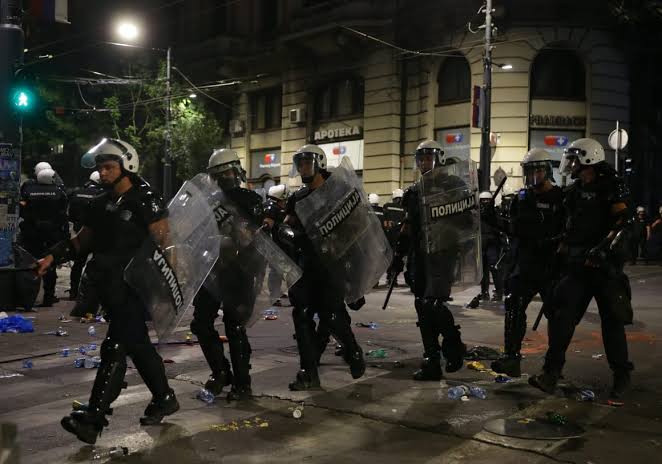
The protest movement, which has grown steadily over the past week, faced its most forceful confrontation as riot police deployed tear gas and crowd control tactics to break up gatherings.
The unrest comes amid mounting frustration with political leadership and allegations of corruption that have fueled a broad-based opposition movement.
Protesters, many of them young Serbians and civil society groups, rallied against what they describe as restrictions on press freedoms, tightening control over institutions, and manipulation of electoral processes.
The use of tear gas highlighted the government’s escalating response to the movement. Security forces blocked access to central squares, detained dozens of demonstrators, and attempted to disperse groups that regrouped after initial clashes.
Observers noted the protests began peacefully before tensions rose as night fell, with some reports of property damage and confrontations between protesters and officers.
International attention is turning toward Serbia as the demonstrations continue to escalate.
Human rights organizations are monitoring developments closely, warning of potential abuses if the government intensifies its crackdown.
Calls for dialogue and transparency are emerging from regional institutions as pressure mounts for authorities to address the concerns driving citizens into the streets.
For Serbia, a country with aspirations of European Union integration, the protests represent a significant test of democratic resilience.
The coming days will determine whether the government chooses to open channels of negotiation or continue with heavy-handed measures that risk deepening divisions.
The widespread participation of diverse social groups suggests the unrest is unlikely to subside without meaningful political responses.