
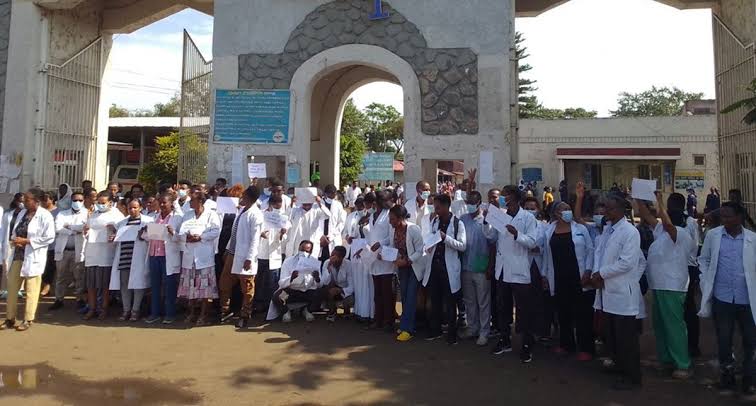
Ethiopian healthcare workers are intensifying strike actions across major cities, highlighting severe wage disparities and deteriorating working conditions in the country’s medical sector.
Doctors, nurses, and other health professionals—already among the lowest-paid in East Africa—have been demanding significant pay raises and better resources to address shortages that continue to burden the nation’s hospitals.
Reports indicate that striking doctors are facing harassment and intimidation from state authorities.
Several medical professionals have described being questioned by security officials, pressured to abandon the strike, or threatened with disciplinary measures if they continue participating.
In some regions, hospitals have remained understaffed, forcing non-striking staff to manage overwhelming patient loads and leading to delays in critical treatments.
The strike has laid bare systemic challenges in Ethiopia’s healthcare system, including chronic underfunding, limited infrastructure, and the exodus of skilled professionals seeking opportunities abroad.
Public frustration is mounting as patients face longer waiting times and reduced access to essential services, particularly in rural areas where healthcare access is already fragile.
Observers note that the government has yet to offer a concrete negotiation plan, raising concerns of prolonged unrest in the medical community.
International health organizations are closely monitoring developments, stressing that prolonged strikes could exacerbate public health risks in a country already grappling with infectious disease outbreaks and food insecurity.
As the standoff continues, the Ethiopian doctors’ strike has become emblematic of a broader struggle for professional dignity, fair wages, and the right to organize without intimidation.
The outcome will likely shape not only the future of Ethiopia’s healthcare sector but also the broader labor rights landscape in the region.