
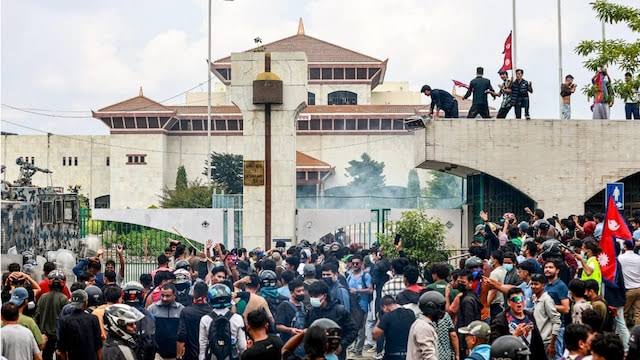
A wave of youth-led protests in Nepal over the government’s recent ban on 26 social media platforms has erupted into deadly violence.
Demonstrators, largely from Generation Z, flooded the streets of Kathmandu and major cities on Monday, September 8, 2025, demanding an end to corruption and the lifting of restrictions on platforms such as Facebook, Instagram, X, WhatsApp, and YouTube.
Police used tear gas, rubber bullets, water cannons, and live fire to disperse crowds after protesters attempted to breach barricades near Parliament.
At least eight people were killed—six at Bir Hospital and two at Civil Hospital—while dozens more were wounded. Witnesses reported hospitals overwhelmed with injured protesters, suggesting the toll may rise further.
The government said the social media ban was necessary because companies failed to register under new regulations, but critics argue the move is a direct assault on freedom of expression and digital rights.
Protesters carried banners reading “Stop corruption, not social media,” reflecting growing frustration with both censorship and governance failures.
Authorities responded by imposing a curfew around central government zones including Singha Durbar and the presidential residence.
The army was deployed in Kathmandu, while unrest also spread to Biratnagar, Bharatpur, Pokhara, Jhapa, and Chitwan, signaling nationwide anger.
International rights groups have condemned the crackdown, warning that restricting online spaces while using force against protesters risks deepening instability.
The events highlight how Nepal’s tech-savvy youth are increasingly becoming a driving force in political dissent.