
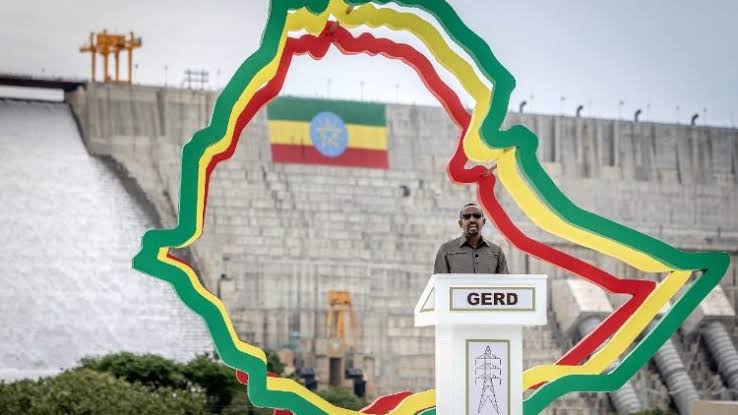
Ethiopia officially inaugurated Africa’s largest hydroelectric project, the Grand Ethiopian Renaissance Dam (GERD), on Tuesday, marking a milestone in the country’s push for energy independence and regional influence.
The $5 billion project, built on the Blue Nile near the town of Bameza close to the Sudanese border, is now operating at full capacity of 5,150 megawatts.
Prime Minister Abiy Ahmed described the GERD as a historic step for Ethiopia and a symbol of pride for Africa.
Addressing regional leaders, including the presidents of Somalia, Djibouti, and Kenya, Abiy said the project represents unity and ambition, urging visitors from across the continent to view it as proof of what African nations can achieve on their own.
Construction of the GERD began in 2011 and has been financed almost entirely with Ethiopian resources. The central bank covered over 90% of costs, while citizens contributed the rest through bonds and donations. Local media noted that no foreign government directly funded the dam, making it a source of national pride as well as infrastructure progress.
The inauguration included a large-scale light show featuring drones and lasers with messages such as “geopolitical rise” and “a leap into the future.” Officials celebrated not only the technical achievement but also the potential impact on Ethiopia’s economy, where almost half the population still lacks reliable access to electricity.
Ethiopia has already begun exporting power to Kenya, Sudan, and Djibouti, with further agreements under discussion. Supporters argue the dam will expand access to clean energy across the region while stabilizing supply in Ethiopia itself, where power shortages frequently disrupt businesses and homes.
However, the GERD remains a source of tension with Egypt and Sudan, both downstream nations that depend heavily on the Nile. Cairo views the dam as a direct threat to its water security, with President Abdel Fattah el-Sissi calling it an existential challenge. Ethiopia, meanwhile, maintains that the dam will not reduce river flow but instead regulate it, benefiting all countries along the Nile.
With the project now fully operational, GERD stands as both a symbol of Ethiopian ambition and a focal point of one of Africa’s most contentious wat
er disputes.