
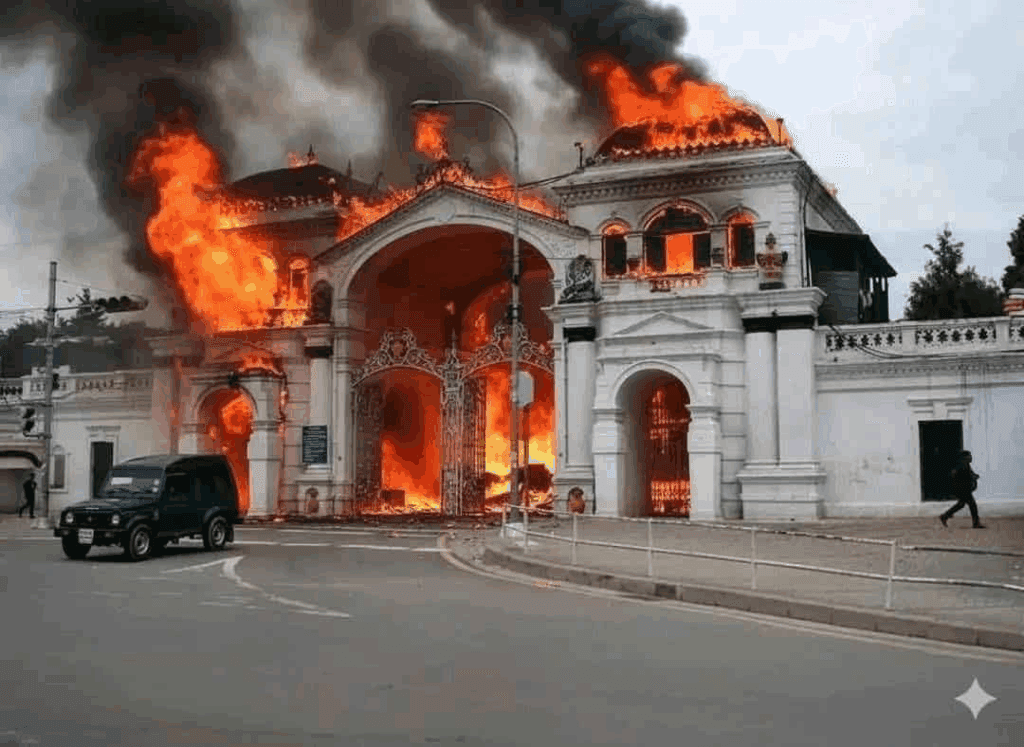
Nepal has been plunged into political and social chaos after Prime Minister KP Sharma Oli resigned on Tuesday, following days of violent anti-corruption protests that left at least 22 people dead.
Crowds stormed parliament in Kathmandu, setting parts of the Singha Durbar government complex on fire and scrawling anti-government graffiti across the walls.
Demonstrators also attacked homes of senior politicians, including Oli himself and Nepali Congress leader Sher Bahadur Deuba. Several ministers are reported to be sheltering with security forces.
The unrest was sparked by the government’s decision to ban 26 social media platforms last week, including Facebook and Instagram, over alleged failures to register.
Although the ban was lifted on Monday night after mounting criticism, protests had already escalated into a nationwide revolt.
A youth-led “nepo kid” campaign, exposing alleged corruption and the lavish lifestyles of politicians’ children, further fuelled the anger.
Clashes around parliament on Monday killed 19 people, with three more deaths reported on Tuesday. Officials confirmed that around 900 prisoners escaped from two jails in the west amid the chaos.
The army has warned it may intervene to restore order if violence continues.
Oli, 73, a four-time prime minister and leader of the Communist Party, said he was stepping down to allow a constitutional solution to the crisis.
President Ramchandra Paudel has accepted his resignation and begun consultations to select a new leader, though Nepal currently faces a dangerous power vacuum.
For many protesters, the moment marks a historic break with an entrenched political elite. “It is high time our leaders change,” said Kathmandu resident Muna Shreshta, 20. “We want our taxes to actually build the country, not enrich the powerful.”
With parliament in ruins, streets filled with demonstrators, and no clear successor in sight, Nepal faces its most serious instability in decades.