
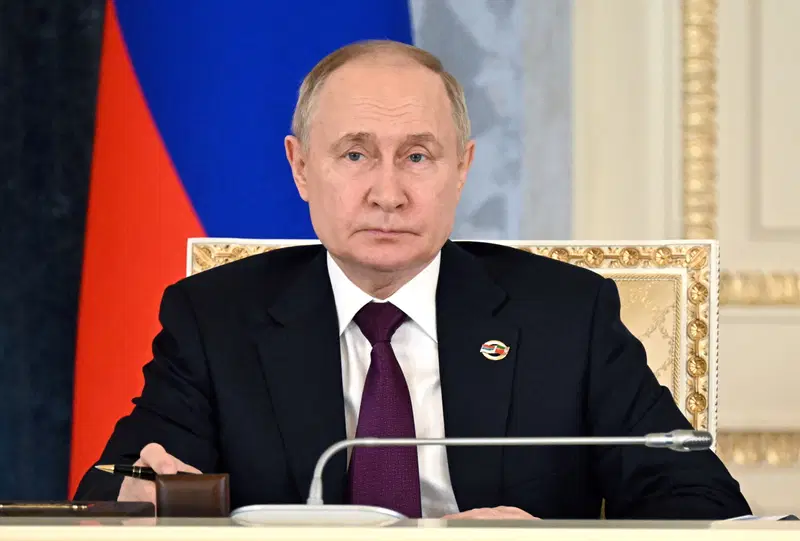
Russia confirmed on Friday that peace talks with Ukraine have been put on hold, while NATO announced new measures to strengthen its eastern defenses. The development comes as tensions rise across Europe following recent drone incidents in Polish airspace.
The suspension of talks was reported after Russian forces continued military drills with Belarus, its close ally. Despite earlier diplomatic efforts, including meetings arranged by former US President Donald Trump, negotiations have failed to produce any breakthrough. Moscow has continued advancing on Ukrainian territory, demanding concessions that Kyiv refuses to accept.
In Ukraine, President Volodymyr Zelensky warned that Russia still aims to take full control of the country. He urged Western nations to maintain pressure on Moscow and to seek greater involvement from China in ending the conflict. Meanwhile, Washington has expressed frustration over the slow pace of progress, with Trump warning that the United States may increase sanctions if Russia refuses to change its stance.
The conflict, which began with Russia’s invasion in February 2022, has left tens of thousands dead and millions displaced. Large parts of Ukraine’s east and south have been devastated by the fighting. Kyiv has insisted it will not give up any land in exchange for peace, while Moscow has rejected calls for a direct meeting between the two presidents.
Tensions escalated further this week when Poland reported that 19 Russian drones flew through its airspace, with three being shot down by NATO jets. Warsaw condemned the move and accused Russia of deliberate provocation. NATO responded by announcing that Denmark, France, Britain, and Germany would deploy additional military resources to secure its eastern borders.
In response to the growing security risks, Poland said it would place about 40,000 troops near its border with Belarus while Russia and Belarus continue their joint drills. The exercises, which involve armored vehicles, helicopters, and naval units, are taking place near Poland, Lithuania, the Baltic Sea, and the Barents Sea.
The European Union also extended sanctions on more than 2,500 Russian officials and organizations for another six months, while Britain introduced new restrictions targeting Russian weapons suppliers and its fleet of ships used to bypass sanctions.
Despite Russia’s denial of responsibility for the drone incursions, European leaders remain on high alert, warning that the region is facing its most dangerous security environment since
World War II.