
Eight major political parties in Nepal, including the Nepali Congress, CPN-UML, and Maoist Centre, have called for the reinstatement of parliament, dissolved by President Ram Chandra Poudel on the advice of interim Prime Minister Sushila Karki.
The parties argue that the president’s move violated constitutional practice.
The dissolution came after violent protests against a social media ban left more than 50 people dead.
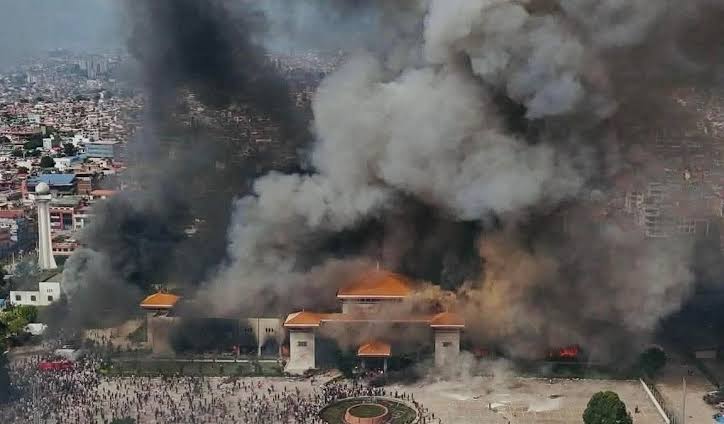
Demonstrators set fire to parliament and government buildings in Kathmandu, forcing Prime Minister KP Sharma Oli to resign.
The unrest led to the appointment of Karki, Nepal’s first female prime minister and former Supreme Court chief justice, to lead an interim government.
Although the social media ban was lifted, protests grew into a wider movement fueled by public anger over corruption and political privilege.
Student leaders from the “Gen Z” movement had demanded both the parliament’s dissolution and fresh elections, now scheduled for 5 March next year.
Karki, seen as a figure with a clean image, faces the task of restoring order, rebuilding damaged state institutions, and addressing the demands of youth protesters while calming fears over Nepal’s fragile democracy.
Soldiers deployed during the unrest have now returned to their bases, and the country is slowly returning to normal.