
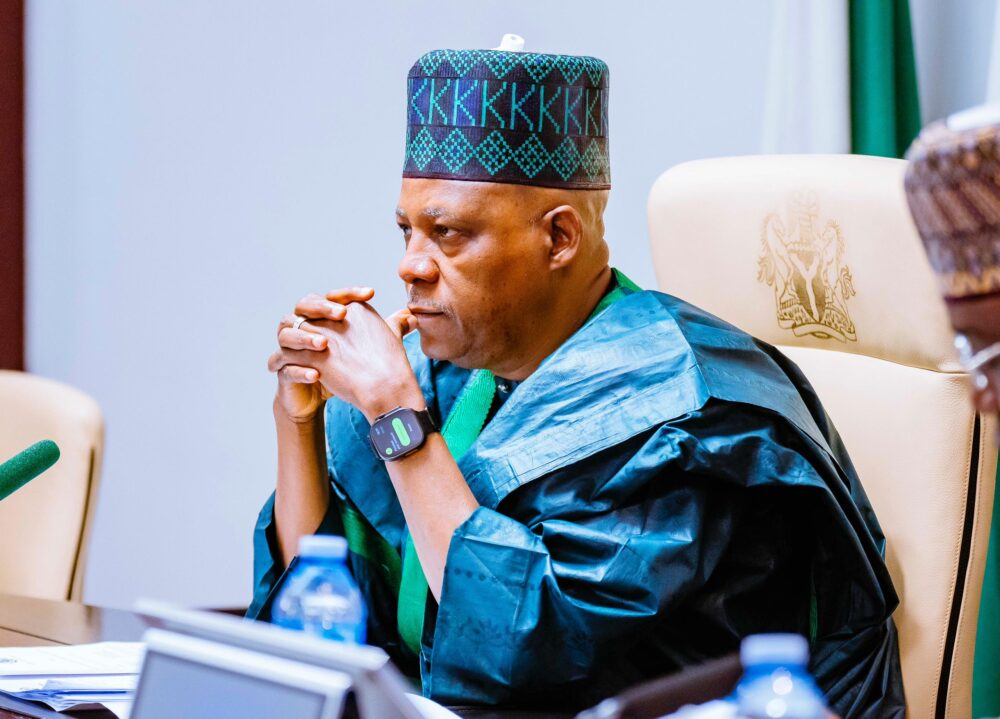
Nigeria’s Vice President, Kashim Shettima, has called for urgent revival and modernisation of the country’s railway services as part of efforts to strengthen its position as Africa’s logistics hub.
Speaking at the Second International Railway Conference in Abuja, he explained that the current administration is working on linking Nigerian cities with a combined network of roads and railways to drive industrialisation and economic growth. He noted that past dependence on road transport had caused congestion, poor infrastructure and high accident rates, and said the government plans to reduce these challenges by expanding rail transport.
Shettima added that the government’s Renewed Hope Agenda seeks to make rail transport a key driver of trade and development, while urging partnerships and private sector involvement to unlock the opportunities in the sector.
He commended the Ministry of Transportation, De-Sadel Nigeria Limited and the Abuja Chamber of Commerce and Industry for organising the railway conference, which he described as a platform for discussing strategies for a sustainable transport system.
Also speaking, the Secretary to the Government of the Federation, George Akume, explained that the High-Speed Rail project reflects the administration’s vision to modernise Nigeria’s transportation sector and promote national integration.
The Minister of Transportation, Said Ahmed Alkali, described transport as a driver of economic growth and mentioned the Federal Executive Council’s approval of ultra-modern bus terminals across the six geo-political zones. He said the development of railways would create new opportunities and foster unity across the country.
The Minister of State for Petroleum Resources (Gas), Ekperikpe Ekpo, linked gas development with rail transport, stating that the country’s gas resources provide stable energy to power railway infrastructure.
In addition, the Director-General of the Bureau of Public Procurement, Dr. Adebowale Adedokun, assured that his agency would ensure accountability and efficiency in procurement processes to encourage investment in the sector.