
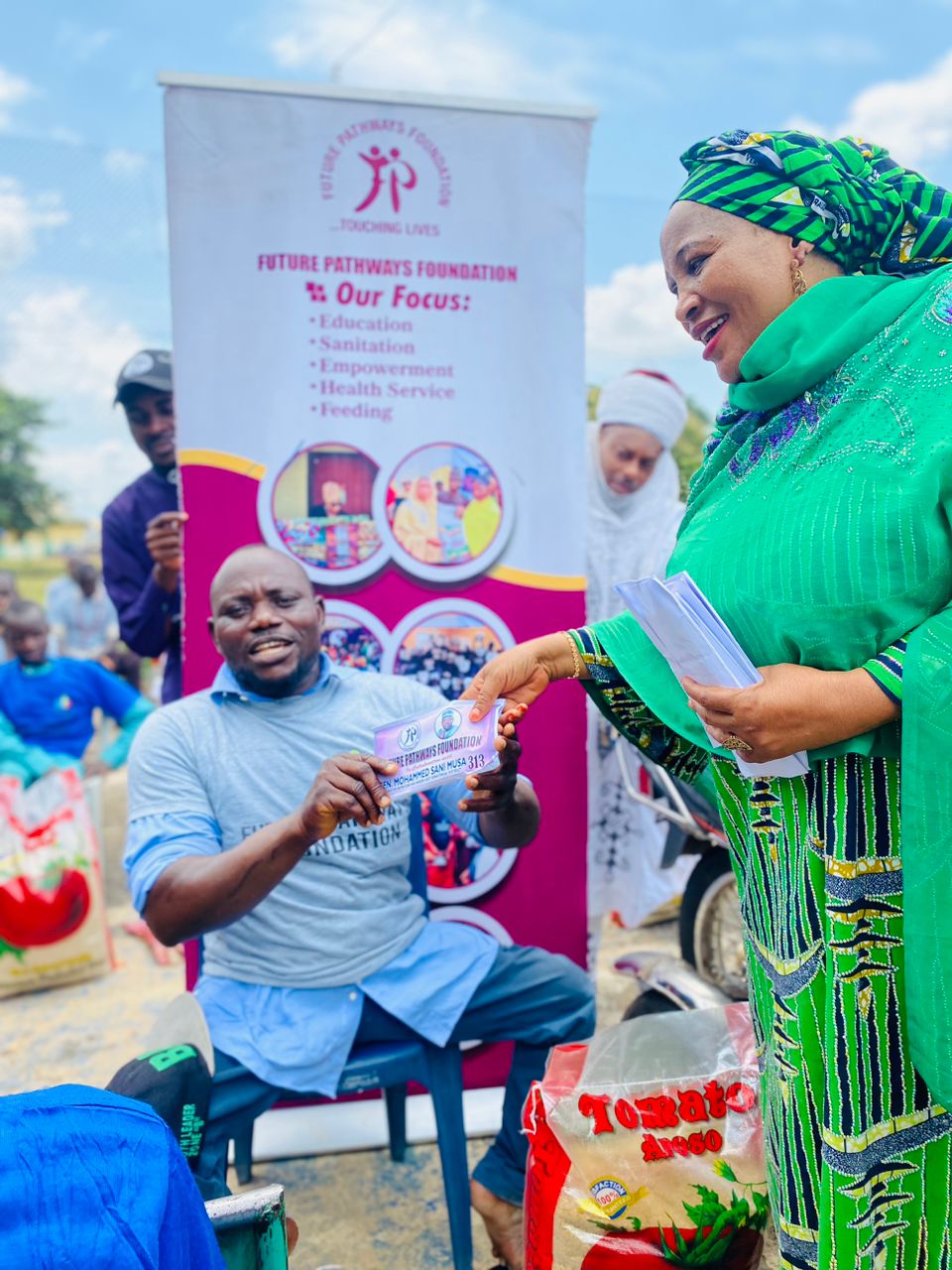
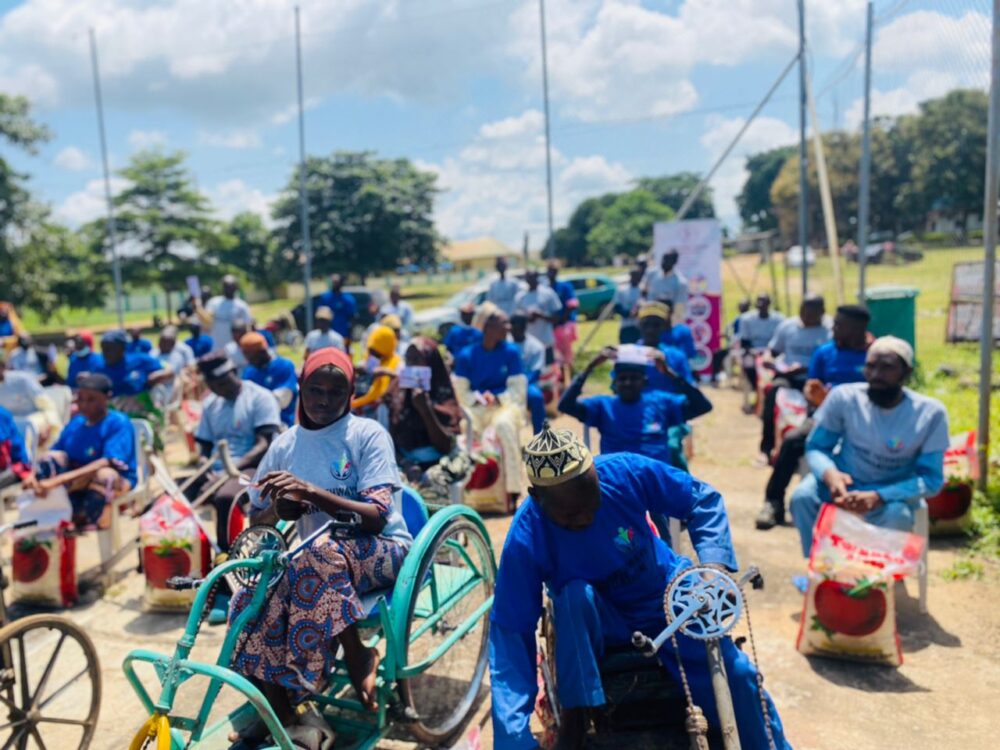
For many of the 100 beneficiaries who gathered in Niger East Senatorial District last week, the day carried more than just the promise of food and cash. It carried dignity, recognition, and a reminder that society has not forgotten them. The beneficiaries, all persons living with disabilities, left the event with ₦50,000 in cash and a 25kg bag of rice each—tokens that may appear modest on paper but meant survival and hope in practice.
The intervention came courtesy of Hajiya Sa’adatu Sani Musa, philanthropist and founder of the Future Pathways Foundation. For years, Hajiya Sa’adatu has built a reputation for putting humanitarian ideals into action, but this initiative reaffirmed her place in the ranks of grassroots change-makers who see empowerment not as charity but as a right.
Beyond Handouts: A Philosophy of Empowerment
In Nigeria, where persons with disabilities often contend with stigma, neglect, and limited economic opportunities, such targeted interventions are not just timely but transformational. The cash support and food assistance offer immediate relief, but they also symbolize a philosophy that the Future Pathways Foundation has consistently upheld: that empowerment is about restoring agency to those pushed to the margins.
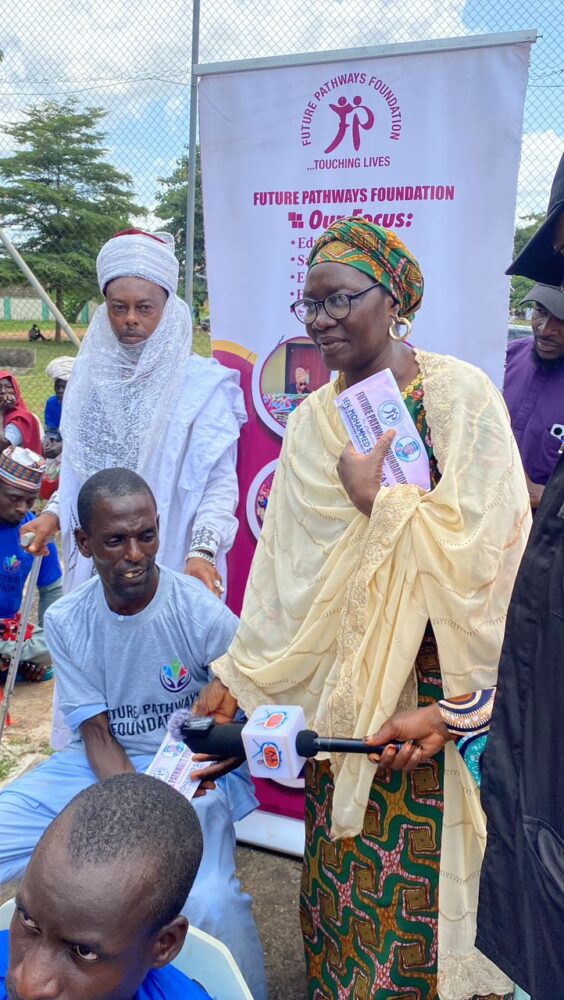
“We believe that everyone deserves the chance to live with dignity, to dream, and to participate fully in society,” Hajiya Sa’adatu said during the presentation. Her words resonated strongly with the beneficiaries, many of whom struggle daily with the dual burdens of poverty and discrimination.
Indeed, Nigeria has over 25 million persons with disabilities, according to the National Population Commission, with most living in rural and semi-urban areas where access to services is scarce. While government policies exist—such as the Discrimination Against Persons with Disabilities (Prohibition) Act signed into law in 2019—implementation remains patchy. In the meantime, initiatives like Hajiya Sa’adatu’s provide crucial stopgaps.
Stories Behind the Numbers
Among the beneficiaries was Ibrahim, a visually impaired father of three, who described the support as “a gift that came at the right time.” For him, the ₦50,000 was not just money but a means to stock his small provisions stall, which had nearly collapsed under the weight of rising prices. For Aisha, a young woman who uses a wheelchair, the rice meant her household would not go hungry for weeks.
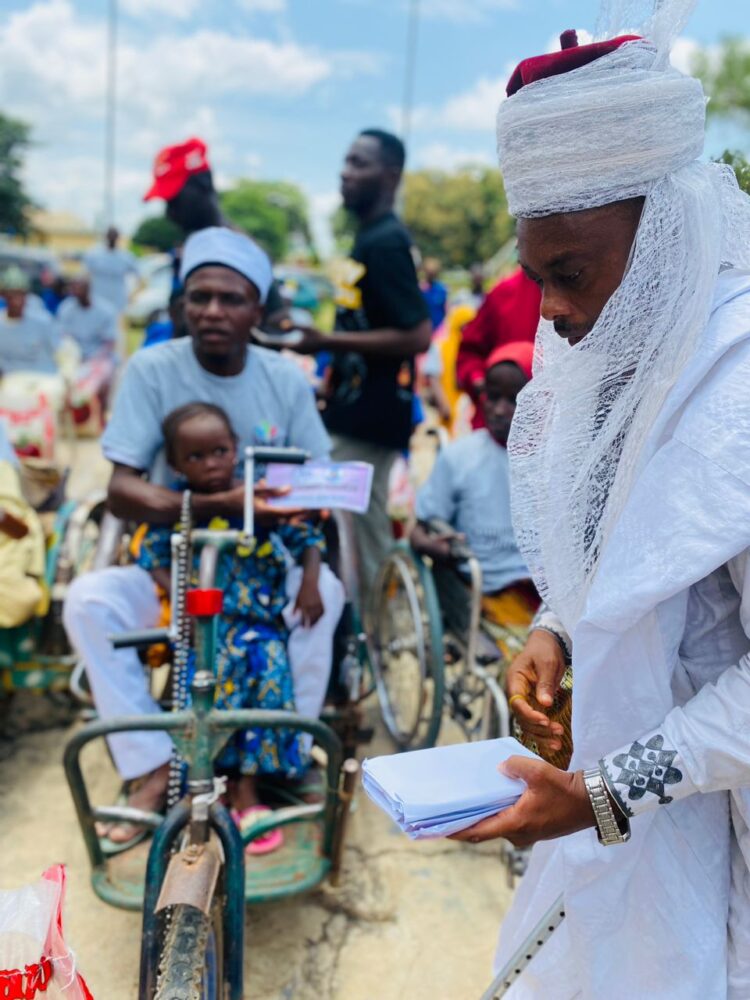
Such testimonies highlight why interventions like this matter. They go beyond relief to reaffirm the humanity of individuals often overlooked in national conversations about inclusion.
A Foundation Rooted in Service
The Future Pathways Foundation has, over the years, carved a niche in humanitarian work in Niger State and beyond. From women’s empowerment programmes to youth skills acquisition initiatives, the foundation consistently seeks to bridge gaps that government alone cannot fill.
Hajiya Sa’adatu, who founded the organisation, often frames her work in terms of shared responsibility. “Touching lives is not about abundance; it is about commitment,” she once remarked at a similar outreach. That philosophy has become the guiding light for the foundation’s growing list of projects.
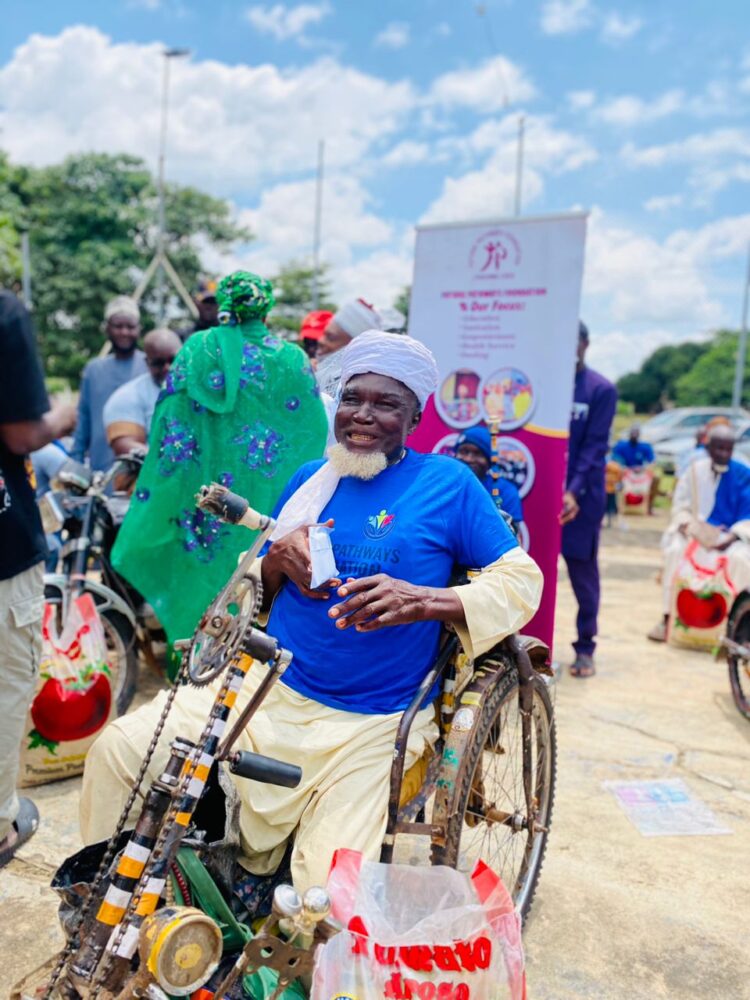
Observers say what distinguishes her work is the intentional focus on marginalized groups. While other philanthropic drives often take a broad-brush approach, the Future Pathways Foundation is deliberate in targeting those most likely to be left behind—women, orphans, rural youth, and persons with disabilities.
The Larger Context
The timing of this latest empowerment drive is significant. Nigeria’s economy has been strained by inflation, with food prices skyrocketing and unemployment persisting. For vulnerable groups, especially those without stable incomes, daily survival has become an uphill task.
In such a context, even modest interventions provide breathing space. Experts argue that while philanthropy cannot replace systemic solutions, it often serves as a critical safety net. “Initiatives like this are important because they provide immediate relief while also drawing attention to the gaps in state policies,” said a development consultant based in Abuja.
For Niger East, the intervention also underscores the power of local leadership in responding to local challenges. By stepping into the gap, Hajiya Sa’adatu demonstrates how individual commitment can ripple into community-wide impact.
A Legacy in the Making
While philanthropy in Nigeria often faces criticism for being short-term or politically motivated, those familiar with Hajiya Sa’adatu’s work describe a record of consistency. Long before this initiative, she had supported widows, funded scholarships, and organized skills development workshops.
The beneficiaries of her foundation are not just recipients of aid but participants in a vision of empowerment. That approach has earned her admiration not only from those she helps but also from peers who see her as redefining what humanitarian service should look like in Nigeria.
As one community leader at the event noted, “What Hajiya Sa’adatu is doing is not just giving rice or money. She is reminding us that every life matters, and that is a lesson for all of us.”
The Road Ahead
Looking forward, the challenge for the Future Pathways Foundation—and indeed for all similar initiatives—is sustainability. How can one-off interventions be scaled into long-term empowerment? For Hajiya Sa’adatu, the answer lies in partnerships. Her foundation is reportedly working to expand collaborations with both public institutions and private stakeholders to multiply its reach.
If such partnerships take root, the foundation’s work could evolve from relief packages into structured programmes on entrepreneurship, education, and health access. That, in turn, could transform hundreds more lives across Niger State and beyond.
A Touchstone of Hope
At the heart of this story, however, are the 100 lives changed in a single day. For those beneficiaries, the empowerment was not just about material support but about recognition, respect, and the validation of their struggles.
In a society where persons with disabilities are often treated as afterthoughts, the intervention stands as a quiet but powerful declaration: inclusion is possible, compassion is powerful, and empowerment is necessary.
Through her Future Pathways Foundation, Hajiya Sa’adatu Sani Musa is showing that the path to a better future begins with acts of kindness that touch lives and create ripples of hope. And for those who left with cash in their pockets and rice in their arms, the message was clear—humanity still has a place in public life.