
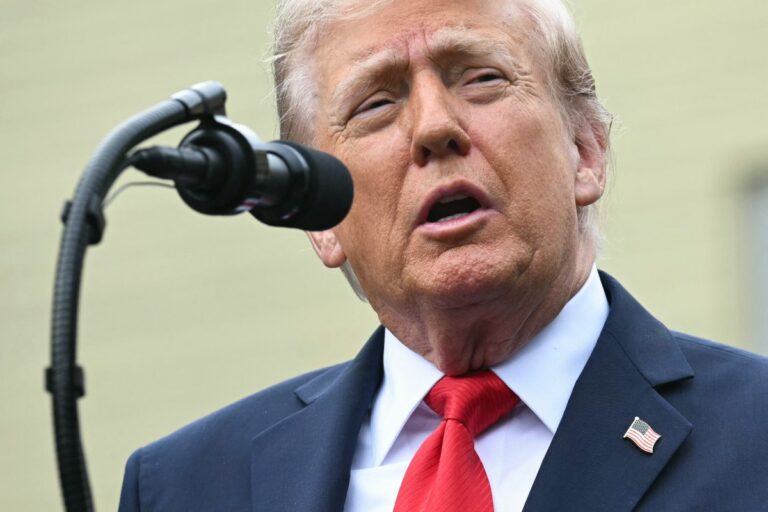
Former United States President Donald Trump has announced that he intends to classify Antifa as a major terrorist group if he returns to office.
Trump, who has long accused Antifa of violence and unrest in the country, said that he would also push for investigations into those who support or fund its activities.
Antifa, short for “anti-fascist,” is not a formal group but rather a loose network of individuals and small collectives that share similar far-left views. A report by the Congressional Research Service in 2020 described it as a collection of independent activists without central leadership. Federal authorities in the United States currently track domestic terrorism but do not have an official list of domestic terrorist organisations.
Trump renewed his call earlier this week, linking Antifa to political violence, including the killing of conservative activist Charlie Kirk. He had previously blamed Antifa for unrest during his presidency, including the 2017 inauguration protests in Washington, the counter-demonstrations in Charlottesville, and other clashes across the country. In 2020, he made a similar threat to classify it on the same level as international extremist groups.
Members who identify with Antifa are often known for dressing in black during protests, confronting far-right groups, and at times resorting to aggressive tactics they consider defensive. The movement traces its roots back to left-wing groups in Germany in the 1930s that opposed fascism.
Critics of Trump’s proposal argue that the move could be used as a way to silence dissent and target political opponents, pointing to the growing political divide in the United States and the increase in politically motivated violence on both sides.
The FBI has previously made it clear that Antifa is not a structured organisation but more of an ideology or movement. As of now, it does not appear on the State Department’s list of designated foreign terrorist organisations, which includes groups such as al-Qaeda and the Islamic State.