
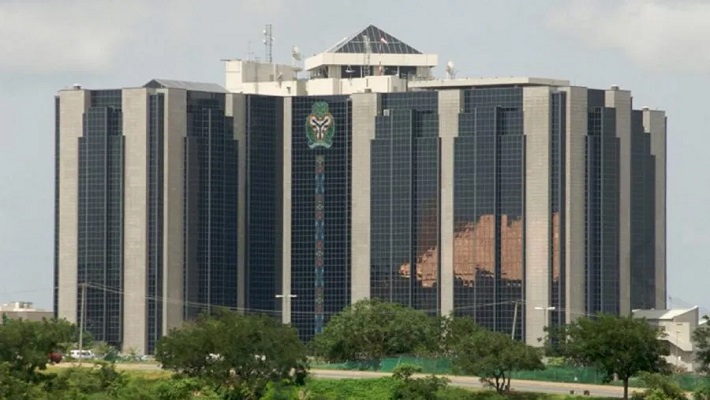
As the Monetary Policy Committee (MPC) of the Central Bank of Nigeria (CBN) holds its 302nd meeting on Monday, some stakeholders in Abuja on Sunday urged the loosening of policy rates.
The MPC had retained the baseline interest rate, known as the Monetary Policy Rate (MPR), at 27.50 per cent for the third consecutive time in its 301st meeting in July.
This marked a departure from the aggressive tightening stance adopted by the committee under the leadership of Yemi Cardoso, the CBN Governor.
The Cardoso-led MPC had raised the MPR from 18.75 per cent to 27.50 per cent between February 2024 and July 2025.
Some stakeholders are calling for a rate cut due to moderation in headline inflation for several consecutive months, a positive sign that prior monetary tightening measures are working.
A development economist, Ken Ife, stated that there had been persistent calls and expectations for the MPC to lower the MPR.
Mr Ife, lead consultant on private sector development to the ECOWAS Commission, however, said he was not persuaded that the time was right to ease the rates.
“It is true that the rebasing of inflation has pushed the real interest rate to positive territory, MPR being higher than inflation.
“The seeming moderation of year-on-year inflation is contradicted by month-on-month inflation. Notwithstanding the general moderation, the food sub-index is rising.
“The meltdown of foreign direct investments (FDIs) and the volatility of the crude sales component mean that we are dependent on foreign portfolio inflows, which are very sensitive to the MPR and yields on securities,” he said.
A financial expert, Uche Uwaleke, stated that the MPC would likely retain the existing rates due to the prevailing falling inflation rate and exchange rate stability.
According to Mr Uwaleke, the director of the Institute of Capital Market Studies, Nasarawa State University, Keffi, the inflation rate has been on a downward trend, and the exchange rate has been quite stable for some time.
He, however, said the inflation rate remained elevated at over 20 per cent.
“The recent drop in the inflation rate has been due largely to seasonal factors associated with food inflation. Core inflation on a month-on-month basis actually increased in August, according to the NBS report.
“Considering the downside risks to inflation, including the increasing FAAC allocations and approaching festive season often characterised by rising demand for goods and services, the MPC will likely maintain the status quo,” Mr Uwaleke said.
He called for a narrowing of the asymmetric corridor around the MPR to further consolidate stability in the banking sector.
“I think the MPR corridor of -1/+5 basis points is too wide and therefore recommend a narrower corridor of -2/+3 basis points,” he said.
The director-general of the Nigeria Employers Consultative Association (NECA), Adewale-Smatt Oyerinde, said the decline in inflation was commendable.
Mr Oyerinde, however, said full benefits would remain muted unless the MPC strategically began to reduce the benchmark interest rate.
“Lower interest rates will not only stimulate enterprise competitiveness but also boost access to credit, investment, and job creation, which are critical levers for inclusive growth,” he said.
He said the current inflation trend presented a compelling case for the MPC to ease its tight stance.
(NAN)