
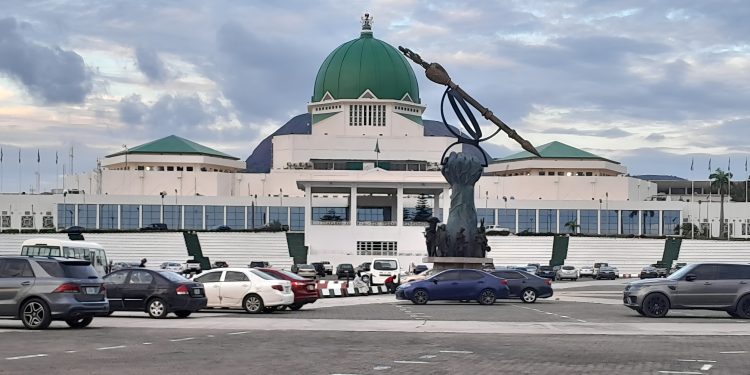
Federal lawmakers in Nigeria have extended their annual recess by an additional two weeks, moving their resumption date from September 23 to October 7.
Both chambers of the National Assembly had earlier gone on break on July 23 after completing the first phase of their legislative activities for the year.
The extension was confirmed in a statement on Tuesday by the Clerk of the National Assembly, Kamoru Ogunlana, who explained that while plenary will not resume until October, committee meetings and oversight functions will continue as planned. He also asked lawmakers to adjust their schedules to the new date.
This adjustment comes at a time the country is battling insecurity, political tension, and economic challenges. Lawmakers have often faced criticism for prolonging holidays despite pressing issues that require attention. Since the start of the 2025 legislative year on February 4, the Senate and House of Representatives have gone on break more than once, with earlier extensions during Easter and Eid-el-Fitr.
The Senate spokesperson, Yemi Adaramodu, said the upper chamber intends to focus on the constitution review process and the amendment of the Electoral Act when plenary resumes. He noted that consultations with the Independent National Electoral Commission and other stakeholders are ongoing, with the aim of addressing gaps exposed during recent bye-elections. He also mentioned that lawmakers would be preparing for the presentation of the 2025 budget.
The Senate Committee on Constitution Review, led by Deputy Senate President Barau Jibrin, has already announced that the current review exercise will be concluded in 2026. At a zonal hearing held in July, the Senate Leader, Opeyemi Bamidele, assured Nigerians that the proposals would be transmitted to state legislatures before the end of 2025.
The current round of constitutional amendment is expected to touch on issues such as electoral and judicial reforms, local government autonomy, devolution of powers, the role of traditional institutions, gender inclusion, and policing reforms. While zonal hearings have been completed, a national public hearing is expected to follow, allowing Nigerians to contribute further to the process.
Despite these commitments, concerns remain over the repeated delays in resumption, as prolonged breaks can slow down urgent interventions and legislative duties. The National Assembly, under the 1999 Constitution, has carried out multiple amendment efforts since the return to democracy, with mixed outcomes depending on concurrence from state assemblies.