
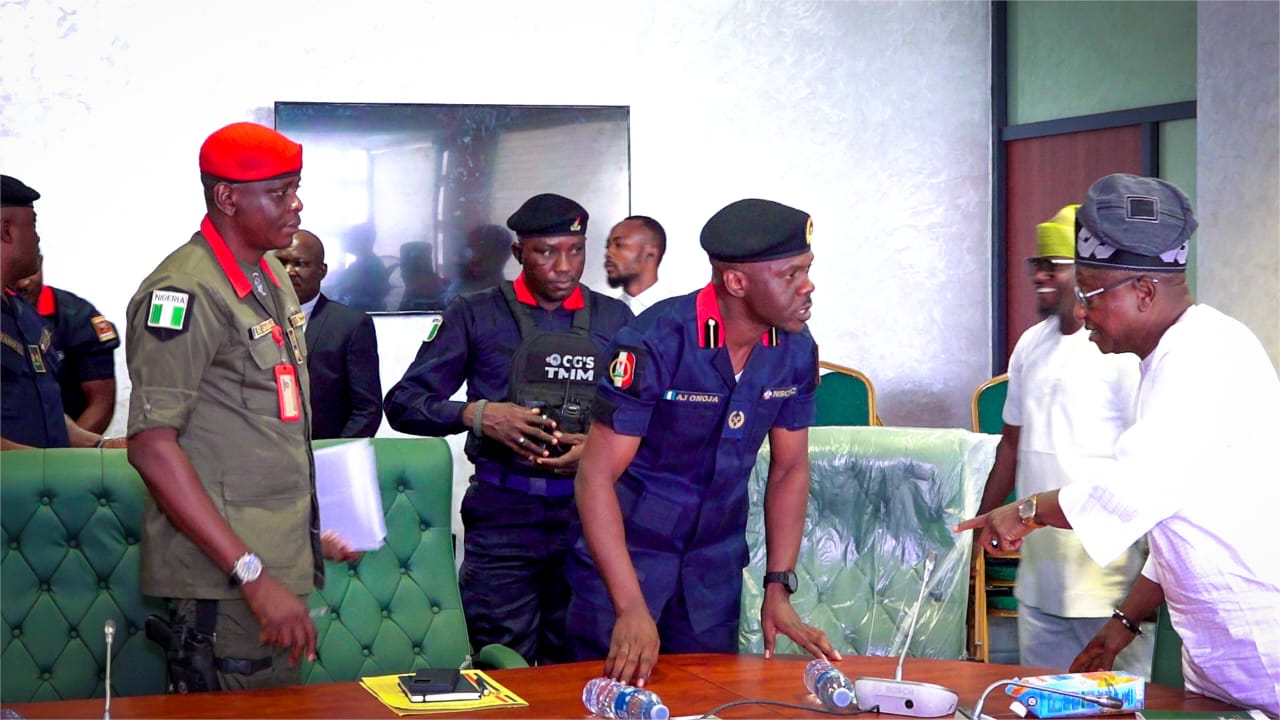
In a renewed push to tackle the menace of illegal mining, the House of Representatives Ad Hoc Committee on Illegal Mining has identified the Mining Marshals of the Nigerian Security and Civil Defence Corps (NSCDC) as a critical institutional partner in the ongoing national campaign to sanitize Nigeria’s solid minerals sector.

The Committee, inaugurated at the National Assembly Complex, Abuja, marks what many observers describe as a decisive policy moment — one that could finally align legislative oversight with on-the-ground enforcement to curb the multibillion-naira menace
 .
.
Chairman of the Committee, Hon. Sani Egidi Abdulraheem, said the committee’s establishment underscores the House’s commitment to addressing a crisis that has cost Nigeria an estimated $9 billion annually in lost revenue, security challenges, and environmental degradation.
“Our mission is clear — to block revenue leakages, enforce transparency, and ensure that every naira from our natural resources contributes to national prosperity,” Abdulraheem said, emphasizing that illegal mining has become both an economic crime and a threat to national stability.
He noted that the NSCDC’s Mining Marshals remain indispensable in achieving the committee’s goals. “Their field intelligence, operational reach, and enforcement capability make them a key partner in addressing the scourge,” he added.
Representing the Commandant-General of the NSCDC, Prof. Ahmed Abubakar Audi, the Commander of the Mining Marshals, John Onoja Attah, commended the National Assembly’s intervention, describing the committee’s inauguration as “a milestone in Nigeria’s collective resolve to secure its mineral assets.”
Attah acknowledged that the Mining Marshals were established under President Bola Ahmed Tinubu’s Renewed Hope Agenda, through the joint leadership of Dr. Henry Dele Alake, Minister of Solid Minerals Development; Dr. Olubunmi Tunji-Ojo, Minister of Interior; and Prof. Audi, Commandant-General of the NSCDC.
He praised the enabling environment provided by the trio, noting that it had strengthened the Corps’ capacity to sanitize the mining environment, protect legitimate investors, and sustain security around critical mining assets.
“Since our inauguration, we have made significant strides — dismantling illegal mining networks, arresting perpetrators, and confiscating illicit minerals,” Attah said. “But we know we cannot do it alone. The support of the National Assembly and other stakeholders is essential to strengthen our operations and close the legal gaps that embolden offenders.”
He urged lawmakers to consider specific reforms, including stronger budgetary backing, improved inter-agency collaboration, a tighter legal framework to penalize violators, and community sensitization campaigns to discourage complicity in illegal mining.
Attah reaffirmed the NSCDC’s readiness to collaborate fully with the committee, pledging the Corps’ “unwavering commitment to ensuring that Nigeria’s mineral resources are harnessed for the benefit of all citizens.”
In his remarks, Abdulraheem said the committee’s work goes beyond oversight — it reflects the legislature’s broader mandate to restore order, transparency, and economic value in the solid minerals sector. “We will leave no stone unturned in reclaiming this sector from criminality and inefficiency,” he said.
Observers say the alignment between the legislature, the Ministry of Solid Minerals Development, the Ministry of Interior, and the NSCDC leadership signals a rare synergy in Nigeria’s governance landscape — one that could finally translate policy intent into measurable impact.
The event drew participants from across the security, mining, and policy communities, many of whom described it as the beginning of a “new era of accountability” in Nigeria’s mining sector — a sector long plagued by unregulated exploitation and institutional inertia.
As Nigeria seeks to diversify its economy beyond oil, the partnership between the House of Representatives and the NSCDC offers a promising path toward restoring order, accountability, and value to one of the nation’s most underexploited sources of wealth.