
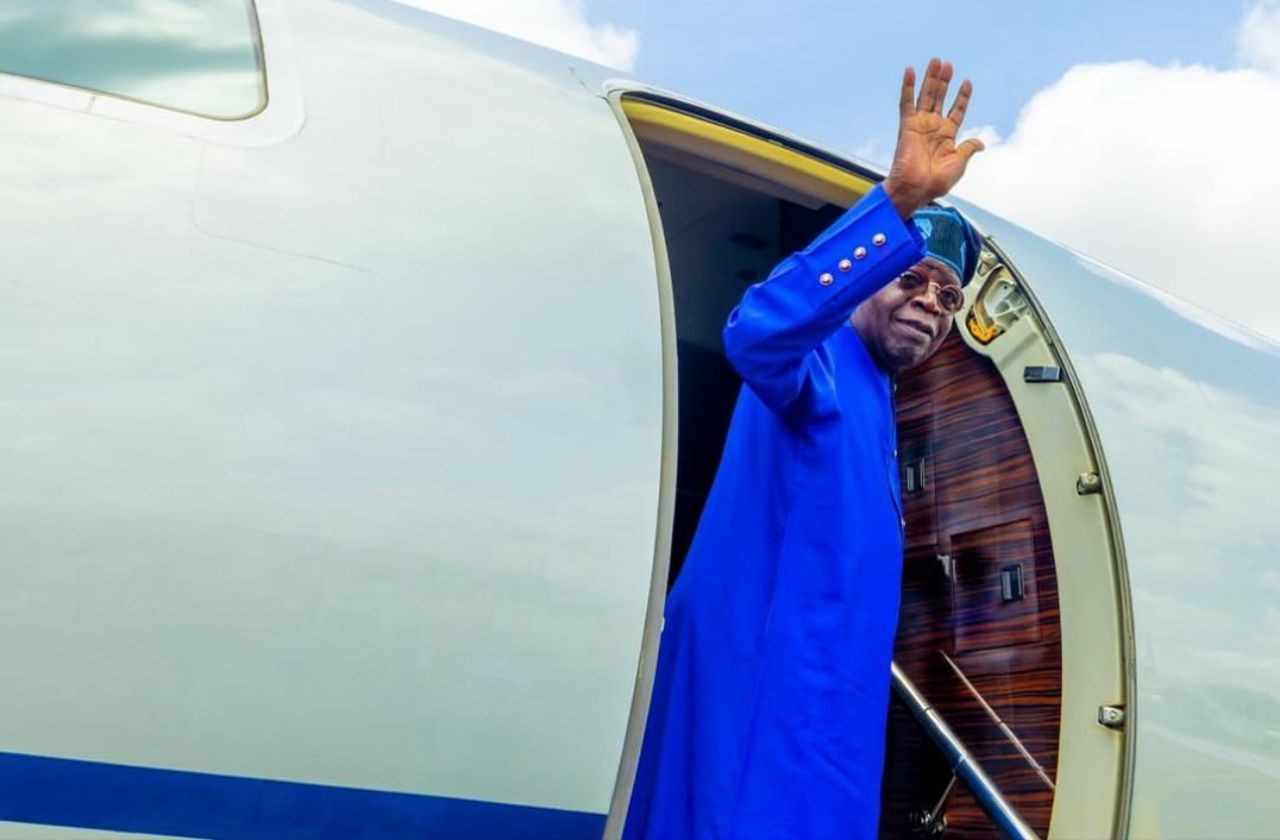
President Bola Ahmed Tinubu will today, Sunday, October 12, depart Abuja for Rome, Italy, where he is scheduled to participate in the Aqaba Process Heads of State and Government Level Meeting, a high-level global security forum focusing on the escalating security challenges across West Africa and the Sahel region.
The meeting, which commences on October 14, is expected to bring together Heads of State, senior intelligence and military officials from various African nations, as well as representatives of international and non-governmental organisations. The forum aims to foster cross-border cooperation and intelligence-sharing mechanisms in response to the rising threat of terrorism, transnational crime, and maritime insecurity in West Africa.
Launched in 2015 by King Abdullah II of Jordan, the Aqaba Process is a counterterrorism initiative designed to enhance global coordination in confronting evolving security threats. It is co-chaired by the Hashemite Kingdom of Jordan and the Government of Italy. Since inception, the initiative has served as a platform for collaboration between world leaders, military strategists, and intelligence experts to collectively address terrorism and violent extremism.
The Rome meeting underscores growing international concern about the West African subregion, where terrorist groups continue to expand operations from the Sahel corridor down to coastal states. It also seeks to address the increasing nexus between organised crime, illegal arms trafficking, and extremist financing networks that destabilise local governance structures.
Participants will deliberate on the interlinkages between land-based terrorism in the Sahel and maritime piracy in the Gulf of Guinea, two major security fronts that have increasingly overlapped in recent years. The meeting will also develop strategies for countering radicalisation, both offline and online, with emphasis on disrupting digital propaganda and recruitment networks exploited by extremist groups.
Experts note that West Africa’s security crisis has become one of the world’s fastest-evolving theatres of conflict, with jihadist movements exploiting porous borders and fragile governance. Nigeria, being a regional powerhouse, remains central to any meaningful resolution of the crisis.
President Tinubu is expected to use the platform to reinforce Nigeria’s commitment to regional security cooperation and to advocate for a more coordinated global approach to combating terrorism and violent extremism.
Beyond the plenary sessions, the President will hold bilateral meetings with other world leaders to discuss security partnerships, defence cooperation, and potential joint intelligence initiatives aimed at stabilising the subregion.
Accompanying the President are key members of his security and foreign affairs team, including:
• Ambassador Bianca Odumegwu-Ojukwu, Minister of State for Foreign Affairs
• Mohammed Badaru Abubakar, Minister of Defence
• Nuhu Ribadu, National Security Adviser
• Ambassador Mohammed Mohammed, Director-General of the National Intelligence Agency (NIA)
Other senior government officials are also part of the delegation.
This visit comes at a time when the West African region is grappling with a series of political upheavals and security crises. The rise of military coups in parts of the Sahel, coupled with the growing footprint of jihadist organisations such as ISWAP and al-Qaeda affiliates, has heightened regional instability. Nigeria’s participation in the Aqaba Process is viewed as both a reaffirmation of its leadership role in West Africa and a step toward securing stronger international alliances.