
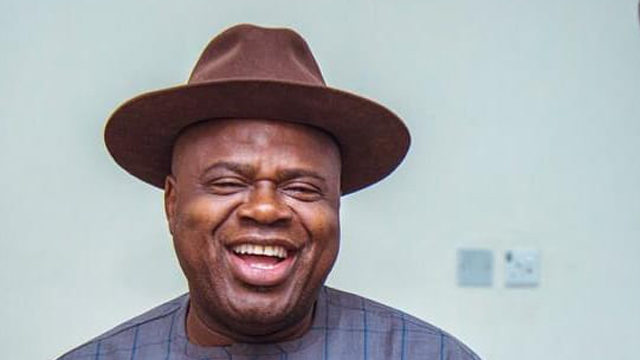
The political atmosphere has been stirred following the formal defection of Bayelsa State Governor Douye Diri from the Peoples Democratic Party (PDP) to the ruling All Progressives Congress (APC), a move that has triggered widespread reactions across the country.
Governor Diri announced his resignation from the PDP on October 15, 2025, during an expanded State Executive Council meeting in Yenagoa. He was joined by the Speaker, Deputy Speaker, and a majority of the PDP caucus in the Bayelsa State House of Assembly.
He said the decision followed extensive consultations and was based on “very obvious reasons.”
Former Bayelsa governor and senator representing Bayelsa West, Seriake Dickson, was among the first to criticize the move. He revealed that Diri had consulted him several times but failed to convince him of the need to leave the PDP. Dickson described the defection as a step toward a one-party state, calling it “unnecessary and unfortunate.”
He also accused defectors of abandoning the problems they created within the PDP rather than working to fix them. “It makes Nigeria look small and makes our democracy look ridiculous,” Dickson said, reaffirming his commitment to remain in the PDP, which he credited with providing political opportunities for the Niger Delta and Ijaw people.
In Kano, PDP chairman Yusif Ado Kibiya described the defections of Diri and Enugu State Governor Peter Mbah as “a relief,” saying the development would not significantly affect future elections. He insisted that the people, not governors, ultimately decide outcomes at the polls.
Reactions in Bayelsa were divided. Some political leaders welcomed Diri’s move, saying his alignment with the ruling party could attract more federal projects and development to the state. Others, including civil society groups and analysts, condemned the defection as politically motivated and a betrayal of the mandate that brought him to power.
As the PDP prepares for its national convention in November, attention now turns to how the party will rebuild unity and reposition itself ahead of the 2027 general elections. Observers say Diri’s exit could become a key test of the resilience of Nigeria’s multiparty democracy.