
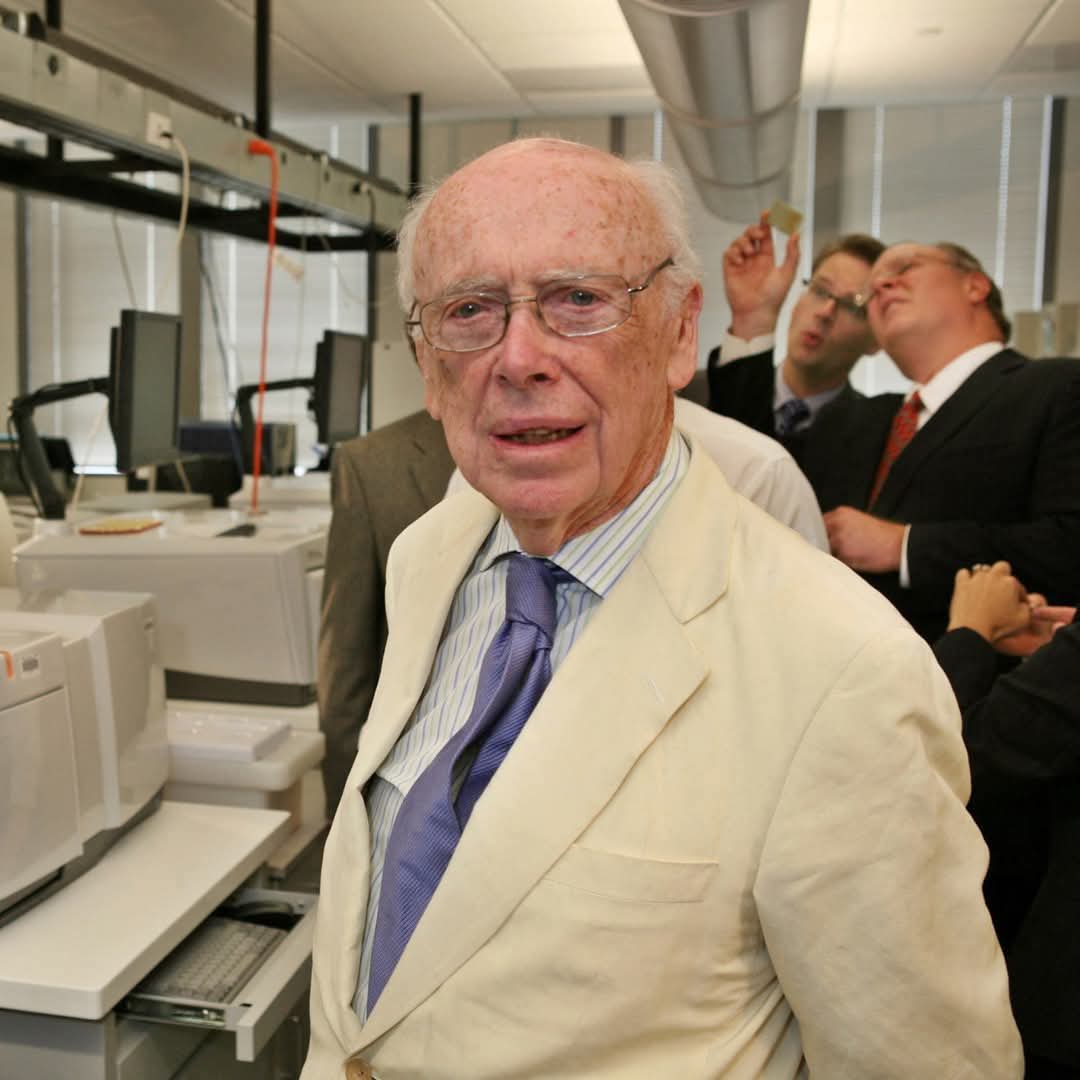
James Watson, the renowned geneticist and Nobel Prize winner, has passed away at 97. Watson, along with Francis Crick and Maurice Wilkins, was awarded the 1962 Nobel Prize in Physiology or Medicine for discovering the double-helix structure of DNA, a groundbreaking achievement that revolutionized genetics and life sciences.
“Francis Crick and I made the discovery of the century, that was pretty clear,” Watson once said, reflecting on the significance of their work ¹ ² ³.
However, Watson’s legacy is also marked by controversy, particularly his comments on race and intelligence. In 2007, he sparked outrage with remarks suggesting Africans were less intelligent than whites, leading to his removal from administrative roles and severing of ties with institutions.
“His outbursts, particularly when they reflected on race, were both profoundly misguided and deeply hurtful,” said Francis Collins, former director of the National Institutes of Health ¹ ⁴.
Watson’s discovery of DNA’s structure has had a profound impact on science, paving the way for genetic engineering, gene therapy, and DNA identification techniques. His memoir, “The Double Helix,” offers a candid look at scientific pursuit and remains a classic in the field.