
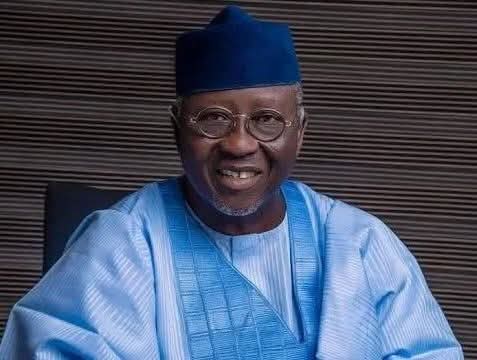
By Muazu Abari
When the history of progressive politics, impactful governance, political doggedness and the changing face of Nasarawa politics and development is written, Senator Umaru Tanko Al-Makura (Sardaunan Gwandara), the immediate-past governor of Nasarawa state, will not only occupy a front burner, but also remain a reference point.
A special gift to the people of Nasarawa state, Al-Makura, fondly referred to as the architect of modern Nasarawa State, radiates confidence and epitomises a renewed hope in the collective aspiration for transformative and visionary leadership. He came like a hurricane to accelerate the development trajectory of the state with his visionary and focused leadership anchored on progressive ideals, scientific approach to governance, patriotism and love for his people.
Within his eight years (2011 to 2019) as governor of Nasarawa state, he paid his dues in the politics and governance of the state, becoming a compass of development and an embodiment of service and integrity. He raised the bar of governance, ending Nasarawa’s dark years of stunted development and re-awakened the spirit of achieving more with less through prudent management of resources. He also set new records and a barometer to assess governance in the state.
He left a legacy in the politics and governance of the state which will be difficult to replicate. Renowned for his pragmatism in delivering results, respect for the rule of law and firm belief in democracy, good and accountable leadership, Al-Makura is dynamic and versatile, combining business, politics and philanthropy in his quest to serve humanity and excel.
In his 73 years sojourn on earth, he has showcased the virtues of integrity, contentment and the fear of God. His hard work, dedication and doggedness are a source of inspiration to upcoming leaders. Born on November 15, 1952, many trooped to the Al-Makura family home to rejoice with the royal household over the gift of a promising and blessed child – Umaru Tanko Al-Makura.
Educational background, enterprises
Some years later, this God-blessed child manifested a worthy character of simplicity, humility, perseverance, obedience and respect which prompted men of wisdom to foretell that, the young Umaru will grow up to bring honour and pride to his beloved parents and become the emancipator of his people. He attended Dunama Primary School, Lafia, (1959 – 1966); Government Teachers’ College, Keffi (1967 – 1971); Federal College of Education Uyo, and Akwa Ibom state (1972 – 1975). Al-Makura obtained a bachelor of education degree from the Ahmadu Bello University Zaria in 1978.
Filled with a burning desire to make a mark on the sands of time, the erstwhile governor and senator took up appointments in various places including journalism where rose to become an assistant producer news and current affairs in the then Broadcasting Corporation of Northern Nigeria (BCNN) which later became part of NTA Kaduna.
Having paid his dues in public service, Al-Makura became an entrepreneur in order to contribute his quota to the growth of the Nigerian economy. Alongside other family members, he established a business empire known as Al-Makura Nigeria Limited, a civil and building engineering company. The company also imported, sold and serviced agricultural and industrial machinery. His business conglomerate continued to grow from strength to strength, expanding to real estate and property development.
He also incorporated Taal Nigeria Limited which has carved a niche for itself in the real estate sub-sector within and outside the country. The company has properties spread around the world including Abuja, Nasarawa, Lagos, Kano, the United States, etc. He started politics from his school days and was elected as the SUG PRO in Uyo as well as a parliamentarian in students Representatives Assembly (SRA), a legislative arm of SUG at ABU Zaria.
Foray into politics
However, his journey into the Nigerian politics firmament started in the second republic when he joined the then National Party of Nigeria (NPN), contributing immensely to the successes of the party. He emerged the youth leader of the party in the then Plateau state and a member of the national executive committee. He was elected into the House of Representatives, representing Lafia/Obi federal constituency in the second republic where he served meritoriously.
In the aborted third republic, Al-Makura joined the National Republican Convention (NRC) and was elected the state secretary of the party in the then Plateau state. On the dissolution of the parties, he moved to the United Nigeria Congress Party (UNCP) and later teamed up with other stakeholders to form the Peoples Democratic Party (PDP). In the build up to the 2011 elections he dumped for the then opposition CPC now APC where he was elected as the third Executive Governor of Nasarawa state on both platforms.
Amidst many bumps and obstacles, Al-Makura emerged governor with a promise and commitment to leave Nasarawa state better than he met it as clearly stated in his inaugural titled, A Fresh Start And A New Deal. He stated, “Let it be said when the modern history of our state is to be written, that when we were tried and tested we were not found wanting in moral fibre, that we did not falter or even flinch, and when we finally took our exit, we left Nasarawa state in a far better form and shape than we found it, or that anyone had ever imagined.”
With these commitments, Al-Makura took over the affairs of Nasarawa state with many challenges, ranging from financial strangulation to decayed infrastructure, to frightening debt profile and over-bloated civil service, to a completely grounded state with no single asphalted road apart from the federal road that passed through Akwanga-Lafia-Makurdi.
Having come fully prepared he swung into action to fulfill his promises to the people of Nasarawa state. He started his administration wonders with the implementation of the N18, 000 new minimum wage to civil servants in the state, and railroaded into the massive investments in infrastructure which saw the construction of access, urban and rural roads with dual carriageways and street lights across the state, thus opening the state to a flurry of economic activities and prosperity.
Infrastructure, other devt efforts
The hitherto dusty Lafia suddenly moved from being a glorified local government headquarters to a befitting state capital. Besides creating jobs for the local populace, the new network of roads was complemented with traffic and street lights at designated points to regulate human and vehicular movements.
The same could be said of the education sector which was in a state of coma with the gates of all tertiary institutions in the state under lock and key opened for normal academic activities .This is aside the massive establishment, renovation and rehabilitation of schools across the state. For the first time in the history of the state, storey buildings with world-class facilities were built as primary schools known as Taal Model Schools in all the 13 local government areas.
This is in addition to a brand new world standard special school for the disabled in the three senatorial districts of the state located in Lafia, Keffi and Akwanga as well as a brand new school of Nursing and Midwifery. Besides, he extended the infrastructural gestures of a three-storey hostel accommodation each to Nasarawa state University Keffi, the state polytechnic Lafia, College of Education Akwanga, College of Agriculture Lafia and a new command secondary school, among many other giant strides in the education sector.
The health sector also witnessed massive transformation during his time through payments of salary arrears and implementation of new salary structure for health workers. The administration also introduced free medical service to pregnant women and children under-five years. He also embarked on the massive construction, renovation and equipping of hospitals and primary healthcare centres across the state, in addition to the construction of model hospitals in Akwanga, Lafia and Nasarawa. Other achievements could be seen in the areas of potable water supply, electricity, revitalisation of the transport sector, among others.
In Al-Makura’s eight years as governor, he transformed Nasarawa state into a model of good governance and infrastructural development in Nigeria to the disbelief of both his admirers and detractors. This feat endeared him to the hearts of the people of the state who nicked-named him the architect of modern Nasarawa state and, of course, the best performing governor Nasarawa ever had since its creation.
It was, therefore, not surprising that at the end of his eight years tenure in 2019, the people of Nasarawa South elected him to the National Assembly as their senator. As a senator, he has not disappointed his people but gave them result oriented and people-centred representation that is second to none in the history of the senatorial district with so many achievements to his credit.
Strides at NASS
They include sponsoring of many bills, one of which led to the establishment of Federal University Lafia Teaching Hospital, attracting federal government’s presence to the senatorial district, massive renovation of school, construction of classrooms, distribution of instructional materials, provision of road infrastructure in Ashige-Ugah-Fadaman Bauna, Agyaragu- Kwarra, Obi-Ukposege-Assakio, among others.
Unfortunately, the people of Nasarawa South lost him to ethnic politics in the 2023 elections which today they are regretting, calling for his return as their senator and remembering him for his wonderful performance and selfless service to the state and his senatorial district.
As Senator Umaru Tanko Al-Makura marks his 73 birthday today, he will forever remain a leader, a mentor and Jagaban of Nasarawa politics. Happy birthday Your Excellency!
Credit: Blueprint Newspaper