
By Abasi Ita
The Federal Government has called on all 36 state governments to increase their health budget allocations by at least one percent in 2026 to support ongoing national health reforms and improve service delivery across the country.
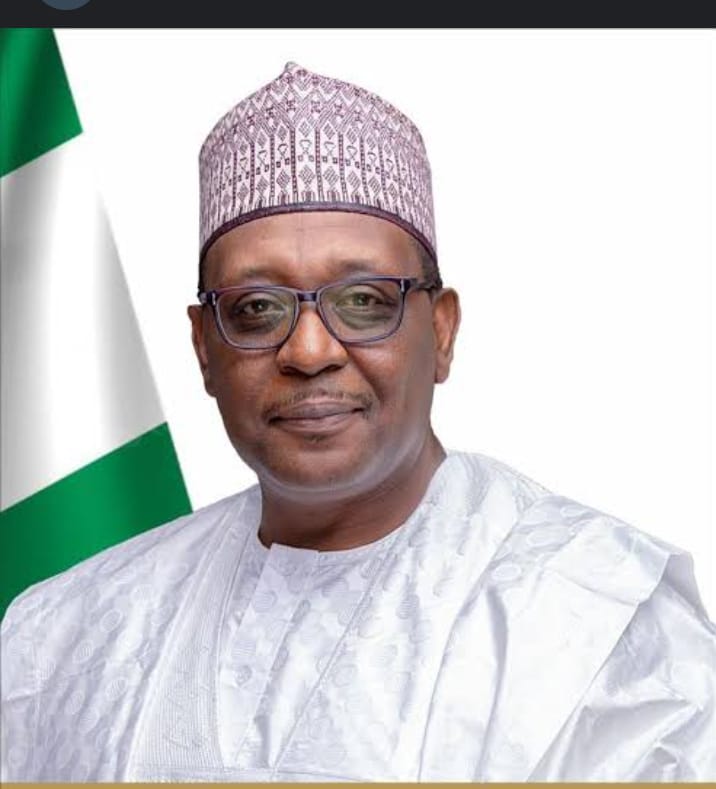
The Coordinating Minister of Health and Social Welfare, Prof Muhammad Ali Pate, made the appeal on Thursday while addressing delegates at the 66th meeting of the National Council on Health held at the Calabar International Convention Centre.
Prof Pate explained that increasing health spending at the state level is critical to achieving better health outcomes and sustaining the reform agenda championed by President Bola Ahmed Tinubu. He noted that recent fiscal improvements at federal and state levels, driven by macroeconomic reforms, have created new opportunities for stronger investment in the sector.
Highlighting progress made so far, the minister announced a 17 percent reduction in maternal mortality recorded in Abi Local Government Area of Cross River State, describing it as a reflection of broader improvements in access and quality of care nationwide.
Prof Pate also disclosed the release of 68 billion naira for vaccine financing to the National Primary Health Care Development Agency, as well as the payment of 15 billion naira in arrears owed to health workers, which he said underscores the administration’s commitment to strengthening the health system.
“This administration is taking health sector financing very seriously, and we expect states to match this effort,” he stated.
The conference brought together commissioners for health, development partners, policymakers and key sector stakeholders to assess progress and set priorities for 2026 and beyond.
Declaring the meeting open, Cross River State Governor, Senator Bassey Otu, reaffirmed the state’s commitment to achieving universal health coverage. He listed ongoing interventions including the renovation of more than 100 primary healthcare centres, recruitment of nearly 2,000 health workers, establishment of four Colleges of Nursing, and the construction of a new general hospital in Ikom.
Governor Otu also highlighted the state’s implementation of CONMESS for doctors, the launch of a Drug and Health Commodities Management Agency to reduce drug prices, and targeted health insurance schemes for pregnant women, children under five, the elderly and formal sector workers.
“These investments demonstrate our determination to transform healthcare delivery in Cross River State,” he said.
Minister of State for Health, Dr Iziaq Adekunle Salako, reported that Nigeria has made progress in expanding access to care but must accelerate efforts to meet the 2036 universal health coverage target. He revealed that health insurance coverage has grown from three percent in 2019 to 17 percent as of October 2024, representing more than 37 million Nigerians.
He added that over 10,800 primary healthcare centres have been revitalized nationwide, quality assessment scores have risen from 42 percent to 77 percent, while digital health systems now link more than 200 hospitals. More than 7.2 million Nigerians are currently registered on the National Health Information Exchange.
Dr Salako commended high performing states, including Lagos, Kaduna, Ogun, Gombe, Edo and Anambra, and praised Cross River for achieving a 20 percent health insurance coverage rate that surpasses the national average.
He warned that despite progress, millions of Nigerians still lack access to essential health services, describing the situation as a public health emergency. He also urged states that have not yet implemented mandatory health insurance laws to do so without delay.
“The right to health is a constitutional obligation. It is not negotiable,” he said, while appealing to striking health workers to return to duty for the sake of the nation.