
By Christopher Sunday
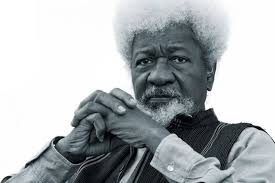
Every society depends on a conscience, a moral compass that evaluates the deeds of its leaders against the timeless standards of justice, truth, and human dignity. In Nigeria, Wole Soyinka has long fulfilled this role. For decades, his words have acted as a mirror to power, reminding the nation that the state exists to serve its people and that silence in the face of injustice is itself a moral act of complicity. Yet today, under President Bola Ahmed Tinubu, Soyinka’s voice seems subdued. The question this raises is philosophical as much as it is political: is the duty of conscience absolute, or does it yield to context, age, and circumstance?
Wole Soyinka once roared like a lion over Nigeria’s moral landscape. During the Jonathan administration, he denounced corruption and institutional decay. Under Buhari, he spoke against ethnic extremism, state repression, and the erosion of civil liberties. His interventions were fearless, principled, and consistent. Nigerians came to see him as the embodiment of moral vigilance.
Now, many ask why the same voice has become quieter under Tinubu. Part of the answer lies in Soyinka’s historical association with the president. Both men were active in the pro-democracy struggles of the nineteen nineties. They opposed dictatorship together and shared a vision for freedom. While this history does not make Soyinka a political ally, public perception interprets his measured tone as loyalty. In a nation deeply divided along ethnic and partisan lines, even restraint is interpreted as alignment.
Age is another factor. Soyinka is approaching ninety. The relentless activism that defined his earlier years has naturally slowed. His present focus leans toward literature, cultural reflection, and the preservation of civic memory. He no longer engages daily in the combative politics that once defined him. Citizens, however, expect him to speak out on every hardship, insecurity, and policy failure. When he does not, his silence is often misread as approval.
The speed of social media amplifies this perception. In earlier eras, Soyinka’s occasional statements carried enormous moral weight. Today, the public expects instant outrage and constant commentary. Rising costs of living, growing insecurity, and political instability demand immediate reaction. Soyinka’s reflective and measured voice cannot compete with the fast-moving currents of online discourse. In this environment, even restraint becomes suspect.
Yet Soyinka has spoken. He has addressed the twenty twenty three election, warned against threats to national accountability, and highlighted the ethical consequences of political decisions. These interventions, calm and deliberate, fail to dominate the national conversation because they lack the explosive tone the public expects. Nigerians often recognise only two modes: attack or silence. Soyinka chooses a third path — thoughtfulness — which is easily misunderstood.
It would be simplistic to suggest that Soyinka is allied with the Tinubu administration. What is evident is a combination of historical association, selective engagement, personal evolution, and strategic caution in a polarized society. His quieter voice is not complicity but the outcome of reflection, prudence, and the recognition that moral authority does not always manifest in thunderous critique.
The deeper philosophical issue is the nation’s overreliance on a single conscience. A country of over two hundred million people cannot depend entirely on one man to uphold morality. Responsibility must be collective, shared by civil society, journalists, scholars, and citizens themselves. Soyinka’s quieter presence highlights not the failure of conscience but the need for a more robust, distributed moral culture.
Wole Soyinka has not switched sides. He has entered a different season of life. His silence is neither betrayal nor alliance; it is the measured voice of an elder navigating a complex world. The real question for Nigeria is not why Soyinka is silent, but why the nation still expects one man to bear the weight of its moral conscience alone.