
By Abasi Ita
The 157th Inaugural Lecturer of the University of Calabar, Professor Regina Etita Ella, has urged governments at all levels to actively include nurses in healthcare policy formulation and decision making, stressing that their participation is essential for effective service delivery and improved patient outcomes.
Professor Ella made the call while delivering the university’s 157th inaugural lecture at the Godswill Akpabio International Conference Centre. Her lecture, titled Nursing at the Crossroads: Transforming Lives Through the Intersection of Public Health Nursing, Nursing Education and Cultural Dynamics in Healthcare Delivery, examined the evolving role of nurses in strengthening health systems.
She said nurses occupy a central position in healthcare delivery because of their close and sustained interaction with patients and communities, noting that their exclusion from policy processes often weakens the impact of health interventions. According to her, involving nurses in the formulation, implementation and evaluation of health policies would significantly improve healthcare outcomes.
The professor also called on government and relevant stakeholders to increase investment in nursing education through improved funding for nursing schools, faculty development and curriculum reform. She explained that contemporary nursing education must integrate cultural competence, leadership, health policy and community health into core training programmes.
Professor Ella emphasised that a strong educational foundation is necessary to equip nurses with advanced clinical skills, leadership capacity, public health expertise and cultural awareness needed to address modern healthcare challenges.
She further advocated the inclusion of public health principles, global health perspectives and interprofessional collaboration in nursing curricula to produce professionals capable of responding effectively to community level health needs and contributing meaningfully to policy development.
Describing nurses as the backbone of healthcare delivery, particularly in rural and underserved communities, she noted that they constitute the largest segment of the global healthcare workforce, accounting for more than half of health professionals in many countries.
She explained that nurses’ proximity to individuals, families and communities positions them to deliver culturally sensitive care, monitor public health trends and lead health promotion initiatives at the grassroots.
Professor Ella, a Professor of Nursing Education, added that every nurse, whether working in hospitals, schools or home based settings, should be equipped with the competencies of a public health advocate to effectively engage communities, promote healthy behaviours and influence positive health outcomes.
In his remarks, the Vice Chancellor of the University of Calabar, Professor Offiong Efanga Offiong, commended the inaugural lecturer for delivering a thought provoking and impactful presentation.
Represented by the Deputy Vice Chancellor Administration, Professor Afam Okiwelu, the Vice Chancellor said the lecture made a significant contribution to the advancement of nursing education and healthcare delivery, noting that its emphasis on cultural competence, leadership, health policy and community health aligns with global best practices.
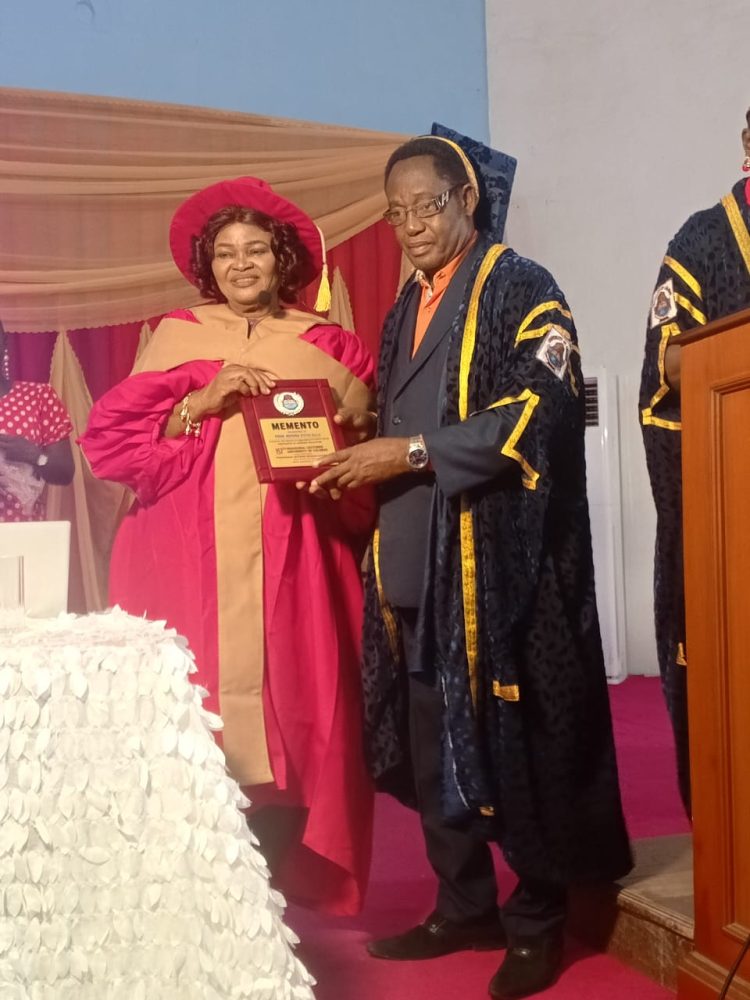
The event concluded with the presentation of a memento to Professor Ella by the Deputy Vice Chancellor Administration on behalf of the Vice Chancellor.